Learning & Education · Motivation and Change

Too Old To Learn

20180923_144642

I’m too old to learn. Honestly, I must be. I’m 50. I mean who reaches the age of 50 and says, yeah, let’s learn stuff? I need to learn lots of new things. I need to study more. Come on, let’s be a bit sensible here. At 50, I know everything. Right?

If only life were that simple. Go to school and college, maybe university and that’s your lot. That’s you all finished. Nothing more to learn, no reason to study anymore. Just go and work and enjoy your life, free of the pressures of discovering new information and ideas.

How terribly dull life would be.

At 50, I feel my capacity for learning has increased, not diminished. I am more curious about things than I ever was at school. School, the last great bastion of learning, but regulated and controlled by necessary structure and requirements. Little choice or flexibility in what YOU wish to learn about, rather than what the government imposed curriculum says you must learn.

Today my interests are broad ranging and eclectic. Not the stuff of secondary education curricula. Volcanoes and earthquakes, the importance of silence and mindful thinking, ambient and experimental music and soundscapes, road and cyclocross cycling, vegan lifestyles and cooking, language and culture, history and the arts, opera, flamenco guitar, poetry and creative writing, contemporary novels and travelogues. I could go on, but how many of those subjects are taught in the high school system, even briefly.

A bit of physical geography, history of course (bound within the general limiting world view of British history, not the global context) , perhaps music (appreciation as opposed to theory, form, structure and influence), English language and literature (again limited in its scope by the sheer weight of the English literary pantheon – yet at school I was spoon fed Chaucer, Shakespeare, Wordsworth and George Orwell. Spanning the centuries, yet barely scratching the surface of creative English expression).

Learning for me has come through the evolution of my own personal development, discovering new interests and finding some things I had dismissed previously as boring or too difficult, actually of merit and worth and surprisingly very interesting.

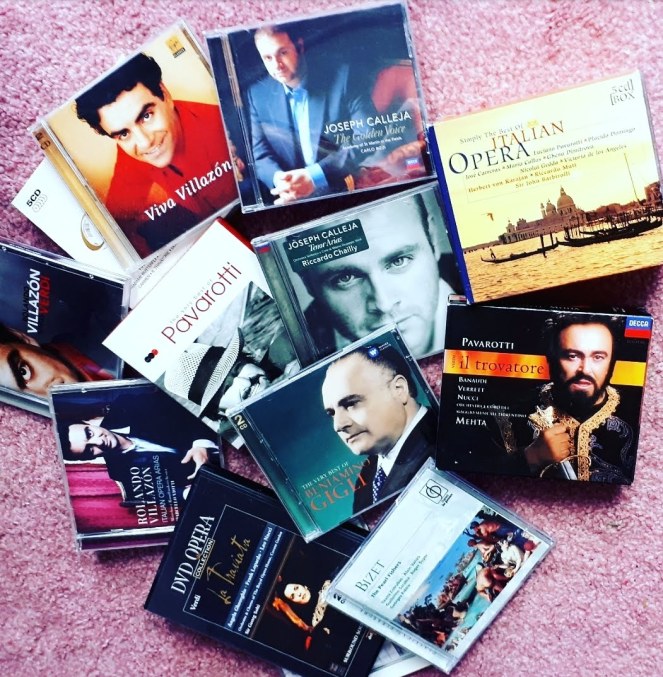
Take opera. I grew up on 80’s pop, indie and rock music. All synthesizers and wailing guitars. Opera was never music I had listened to, nor explored. Yet, my father loved the classic tenors, Pavarotti and Domingo, Carreras,  Gigli, Caruso, Bjorling. I shunned it at the time, but hearing Una Furtiva Lagrima, or la Donna e Mobile or the Toreador’s song must have registered somewhere. Because with age, I found a new appreciation for tenor singing, for the craft and skill, the dramatic and romantic voices that were suddenly projected on to a popular platform during the 1990 Italy World Cup. When football and opera collided in a perfect marriage of expression, beauty and enjoyment.

Subsequently, the world of opera opened. Not just the wide repertoire of the tenor, but the vast and dynamic field of opera. The enjoyment from watching the great ensembles sing in chorus, the comedy of Donnizetti and Rossini, the dramatic story telling of Verdi and Puccini, the lyricism and poetic beauty of Bizet and the musicality of Mozart. And the arias that elevated opera to world renown. Nessun Dorma, E Lucevan la Stelle, Largo al Factotum, O Mio Rimorso, E’ la Solita Storia, The Pearl Fishers duet, The Queen of the Night Aria.
screenshot_20180923-144148_instagram

But with learning comes the desire to know more, to delve further, to discover and unlock the secrets to this new world you have opened. And thankfully no longer do we need to trawl libraries and await monthly journal publications; although there is a joy in spending an afternoon in a library, consumed by words and silent wonder and a pleasure as the latest journal or magazine bounces on to the doormat. Learning has never been so accessible. A few clicks on the internet and you are taken immediately to wherever you want to go. The world unlocked, the door wide open and the vastness of knowledge awaiting you. Just walk through the door.

My father was a military man. A soldier and an officer in the army. 30 dedicated years. A passion for all he did, yet the inflexibility the military affords to its personnel. Times, dates, schedules, their whole life controlled and regulated. A time for rest, a time to play, a time march and train and exercise, a time for learning. But the subjects of the military’s choosing. Could a 20 year old private spend hours over the works of Verdi? Not to the detriment to their career, their job and the role they were training for.

What did my father do the moment he left the army in his mid 40’s? Learn. Study. He took ‘A’ Levels in politics and geography and passed with A grades. He went on to complete a Masters in Health and Safety management. He is 71 now and studying for a Phd, a doctorate. His thesis is about the ‘Efficacy of Managers in the Third Age’ – ie the effectiveness of managers in their 70’s and 80’s, using their wealth of experience and knowledge to the betterment of their (perhaps retired from) companies and their employees. At a time when many would be happy playing a round of golf and booking a cruise with SAGA holidays.

So, as I take inspiration from my father, I can see there is value and worth in continuing to learn. We are bound only by the limitations of our own curiosity, not by age. At 50, I am spending more time with my head in a book than I do listening to the diet of The Smiths, The Human League, The Cure, ABC, etc that I always used to do. These days you will often find me sat at the table, early in the morning, 5am while the world sleep, sat in silence. Alone in my thoughts, reassessing what I know and what I have learned and how I can apply that knowledge. Or sat, writing a poem, looking at photographs I have taken and critiquing them myself. Or sat reading, absorbed in the words and knowledge of others. Ready and willing to learn. Wishing that I was 15 not 50 and better suited to the rigours of education. And more prepared, as I am now, to give time and thought and dedication to learning.

We are never too old to learn. We can always learn from each other, from the world around us and the information at our finger tips. But as important is that we help open the door to learning and knowledge for the next generations. That we pass on not only our knowledge, but also our desire for learning and discovery. Today, the younger generation are very often consumed by smart phone apps and social media. A world of selfies and pseudo-stardom, minor celebrity, desire to go viral and a need for likes and shares and a validation of themselves by universal approval and acceptance of their ‘status’.

But I would encourage another way. By all means interact and use your Instagram, Twitter or Facebook. Take pleasure from it. But, let these apps fire your imagination. And let them lead to learning. You see a photo of somewhere you have never heard of. You can either dismiss it, swipe to the next post or photo, or you can be taken there, immediately. Open Google maps, Streetview, Wikipedia, visit their homepage, learn the history, the flora and fauna, the landscape, the climate.

We are bound only by the limitations of our curiosity.

And we should always have the capacity for learning and should never ignore that curiosity. No matter how old you are.

PS, if you have read this and have considered you are not too old to learn or improve your English…then get in touch. I would be only too happy to help you and unlock the door to the English language!

To read my poetry please visit

http://www.frobipoetry.com or go to instagram @ajfrobisherpoetry

Best wishes,

Tony Frobisher, Worcester, September 2018



Pronunciation · Uncategorized

Pronunciation – The Route to Better Communication

What is the one area of English that the vast majority of English language schools and English language teachers shy away from and rarely teach?

Pronunciation

IMG_0209.JPG
The Pronunciation Police……..

Really? Yes, it is true. Even if pronunciation is covered in class, it is often an afterthought, or quickly glossed over.

Pronunciation is perhaps THE most important element in effective spoken communication. Yet it is much maligned and frequently overlooked in favour of vocabulary, grammar and reading etc. Even poor old writing which is often seen as the poor cousin in English teaching receives more attention than pronunciation.

But why is this? There are many reasons most teachers and schools do not teach pronunciation.

  • Teachers who train for their Certificate in English Language Teaching to Adults (CELTA) generally do not get taught the importance of pronunciation during the course. The focus is on lesson planning and structure, group dynamics and lesson management, ‘how to teach’…rather than ‘what to teach’.
  • Most English language teachers embark on a career in EFL without having learnt or studied pronunciation or linguistics
  • Most schools do not include pronunciation in their curriculum and consequently even if the teacher has previously learnt about phonetics, intonation, syllable stress etc, they quickly forget it through non use
  • If you teach overseas most of your classes are monolingual groups. I used to teach groups of around 15 Indonesian students. All had the same pronunciation difficulties which could be easily attended to. But when a Japanese or Korean student joined the class, the problems in communication between students (and the teacher too) became very apparent and problematic – because their pronunciation was so different
  • Students don’t feel the need to learn pronunciation…’It’s boring/ unnecessary/irrelevant’ They want vocabulary and grammar instead. That is until they try speaking with a native speaker or other English language learner, perhaps over the phone, in a meeting etc and while the student has excellent vocabulary and grammar and speaks very well, the reaction they receive is ‘Huh? Sorry, I don’t understand….”
  • There has been a global shift towards a generic ‘American’ accent amongst learners. Many of my students in Indonesia and Malaysia spoke English with an American inflection…or a ‘twang’ They sounded quite American and I was impressed. When I asked if they had an American father or mother or if they had spent time living in the States or Canada very often the answer was no. They had never left their country. Really?….Yes, a constant diet of MTV, American films and television series had seen them develop an accent more in line with Los Angeles than Jakarta or Kuala Lumpur.
  • The globalisation of accent in learners does not however account for the vast majority of learners from a huge variety of linguistic backgrounds. All of whom present particular problems with learning how to formulate correct vowel and consonant sounds, effective stress and rhythm and nuanced, communicative intonation. Take a learner (one of the over 1 billion people learning English currently) from Russia, Italy, Saudi Arabia, Japan, Mexico and Algeria and you will discover a huge difference in how their English sounds…a complex pattern of sounds, dropped consonant endings, flat monotones, exaggerated intonation, confused consonant sounds, flattened vowels, unusual word stress etc etc. It is a linguistic minefield
IMG_0139.JPG
This way to better English….help your English take off with pronunciation

Luckily I have worked in a school where pronunciation was given equal importance as reading, listening, speaking, writing, grammar and vocabulary. Two lessons per week were devoted to improving pronunciation. When you have a class of 6 students comprising a Swiss, Spaniard, Russian, Brazilian, Kuwaiti and Japanese you can understand why pronunciation was so necessary.

Many of the students experienced exactly the same problems in their first few days at the school. Based in the West Midlands of England, the students were immediately exposed to native English speakers in every situation. From interacting with a host family, taking a bus to school, buying lunch or train tickets, asking the way, buying a pint in a pub or ordering their fish and chips….

This is a summary of what they found

  • “I can understand the teacher and the staff in the school, but I can’t understand people in the city….Why?!” The reason is simple. As teachers we speak with a clearer, more careful pronunciation dependent on the level of the student. In the ‘real world’ outside of class the students were faced with ‘fast native speech’. I explained that actually they did understand. They knew all the individual words…But it was the speed and the way native speakers link or connect words together that was the problem.

One student panicked in a shop when the assistant asked her..”Wudyalikabag?”…Say it quickly and it is one very fast utterance.. a noise. But we are used to hearing it in context, regularly. The student looked to me for help. “Would..you..like..a..bag?” Ah, I understand she said. She knew the words, the sentence. Easy. But it was understanding fast speech that caused all her problems

  • They expected most people to speak English with a standard English accent; ‘Received Pronunciation’. The English they would most probably have heard via course book listening exercises, the BBC radio and online…’Oxford English’ as it is sometimes known. What they discovered was a variety of English accents which often changed in a very short geographical distance. Within 120 miles / 200km of our school the accents of Birmingham, Wales, Oxford, Bristol, London, Manchester and Liverpool were as diverse and different as you could find.
  • Added to the accents the students experienced a range of dialect….vocabulary and expressions, idiomatic language that caused them more problems in following native speaker pronunciation.
  • When they spoke to native speakers, although most people tried to help and were patient in listening, some would get frustrated and a few would walk off or say ‘no, sorry, can’t help you’. Not very nice. But the root cause was not bad grammar or poor vocabulary. It was how the student asked the question. The use of pronunciation. Take an example of a pleasant, friendly Russian man. Let’s call him Vladimir. He approached a person and asked ‘Can you tell me way to station?’ However his natural tendency as a Russian speaker is to speak with a very low monotone. A flat ___________________________ sentence. No up and down, rise and fall.

“can….you…tell…me…way…to…station?” – Of course there a couple of articles (the) missing; typical of Russian speakers. And can would be better as ‘could’…and don’t forget…’Excuse me….please?’ People would not answer. People would walk away. Why? Grammar, vocabulary…missed article?

No. A low, monotone sounds angry, sad, fed up, bored, aggressive, annoyed, tired, direct, impolite etc etc….. Vladimir soon learnt the importance of rise and fall in intonation to create the correct feeling and to get the appropriate response from the listener.

  • With a few structured lessons looking at individual aspects of pronunciation such as shifting syllable stress (I want to reCORD a new REcord….We would like to preSENT you with a leaving PRESent), word stress – SUpermarket…not (French speakers) suPER marKEET , intonation and understanding common fast expressions (gonna wanna gotta d’ya (do / did you?))  students very quickly adapted to their new environment and began to understand and communicate more comfortably both in and outside of school.
  • Once students had studied pronunciation, almost every one said how important they felt it to be in helping them improve. And they could understand why their meetings, presentations, conversations, phone calls etc, were unsuccessful  and frustrating previously.

As some students quickly realised, there is a very big difference between these sentences; (say them quickly)

“This is Mr Peter Smith, my boss. He is a very IMportant man”

“This is Mr peter Smith, my boss. He is a very imPORTant man”

IMG_0164.JPG
No matter your nationality or language, improving your pronunciation is essential to communication and confidence in English

So, in summary, what is the value of learning pronunciation, or in teaching it?

  • Students are able to make progress more quickly, by developing more effective spoken skills. Their pronunciation supports their development of the other key skills and allows them to be more successful in all conversational and speaking situations.
  • Students lose the fear of speaking publicly, the worry that ‘no one will understand me’. They quickly gain confidence in the knowledge that native speakers and other language learners of all linguistic backgrounds can understand what they say.
  • Students develop a more natural and fluent way of speaking. They begin to eliminate errors that cause confusion or a poor, unexpected reaction (e.g losing their monotone speech or overly exaggerated sentences).
  • Teachers are able to create a more harmonious and collective learning environment within their classes as everyone understands everyone else!
  • Teachers can introduce realistic role plays, authentic listening materials and ideas that can be immediately put to use outside of the classroom environment (whether in a native English speaking country or even in watching native level English video, Skype calls, meetings with expatriate native speakers etc).
  • While vocabulary and grammar are essential, without effective pronunciation, a breakdown in communication is inevitable.
  • Pronunciation lessons do not have to be boring, uninspiring and irrelevant. They can be exciting and varied. They can be pitched at every level from beginner to advanced.  Even beginners need to understand ‘Wasyaname?’ ‘Whereyafrum?’and ‘D’yahav’nyquestions?’
  • Pronunciation is often neglected in EFL, but if you incorporate pronunciation into your lessons and curriculum, you will be gaining a significant advantage over teachers and schools who ignore pronunciation.
  • The improvement in student confidence, ability to be understood and to understand other speakers of English is often very rapid. Pronunciation can be the catalyst to accelerated learning and overall improvement in their English level.

As part of my online English teaching, I am happy to focus on aspects of pronunciation that students find problematic. This could include voice coaching for presentations, conversational techniques, intonation or individual phonetic sound problems. All you need to do is ask …although when speaking to you, I may be able to advise you immediately which aspect of pronunciation you would benefit from working on.

Good luck!

Tony Frobisher