English · language · Learning & Education · Travel

English Reflections – Travel and the Importance of Real Language Learning

Why language learning still matters.

Koutoubia Mosque, Marrakech
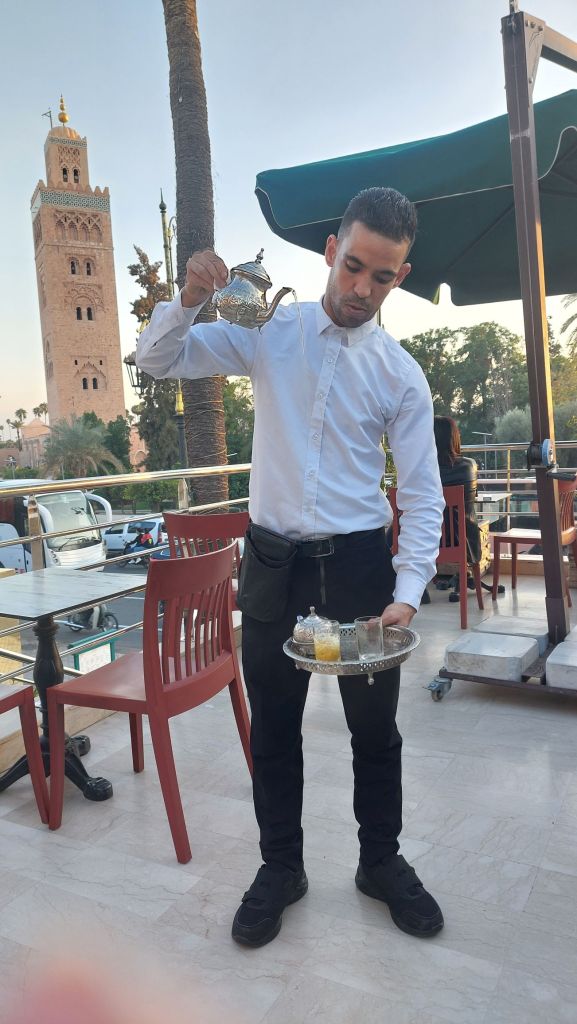
Moroccan hospitali-tea
The Koutoubia Mosque at sunset
Time for Tagine
The Spice Bazaar, Marrakech
In the souk, Medina, Marrakech
Jemnaa el Fna, Marrakech
Marrakech, Morocco 🇲🇦

Asalaam wa’alaikum…bonjour, lebus? Al’hamdullilah….ca’va bien! Good thanks, and you?

Being an English teacher is a job where the rich use of English is an ever constant thought. I live the language, help others improve, develop and gain confidence in their English and immerse myself in the complexities of verbs, nouns, adjectives, adverbs, passives, actives, prepositions, tenses etc etc.

But is an ability to speak English as prized as it once was? Is having a command of the English language as advantageous now as it was 30 years ago?

Turn back the clock….it’s 1996 and I am somewhere in northwest China – Kashgar, home of the Uighurs – a Muslim minority population in majority Han Chinese China. The semi-autonomous Xinjiang province. The Uighurs speak a Turkic language. But we are surrounded by Chinese and Arabic scripts, Mandarin and Uighur speakers and very few English speakers.

My friend Simon and I were backpacking. A 4 month overland trip from Hong Kong to Athens through China, down the Karakoram Highway in Pakistan and across to Iran. Through Iran and a traverse of Turkey before island hopping through the Greek Islands and arriving in historic Athens.

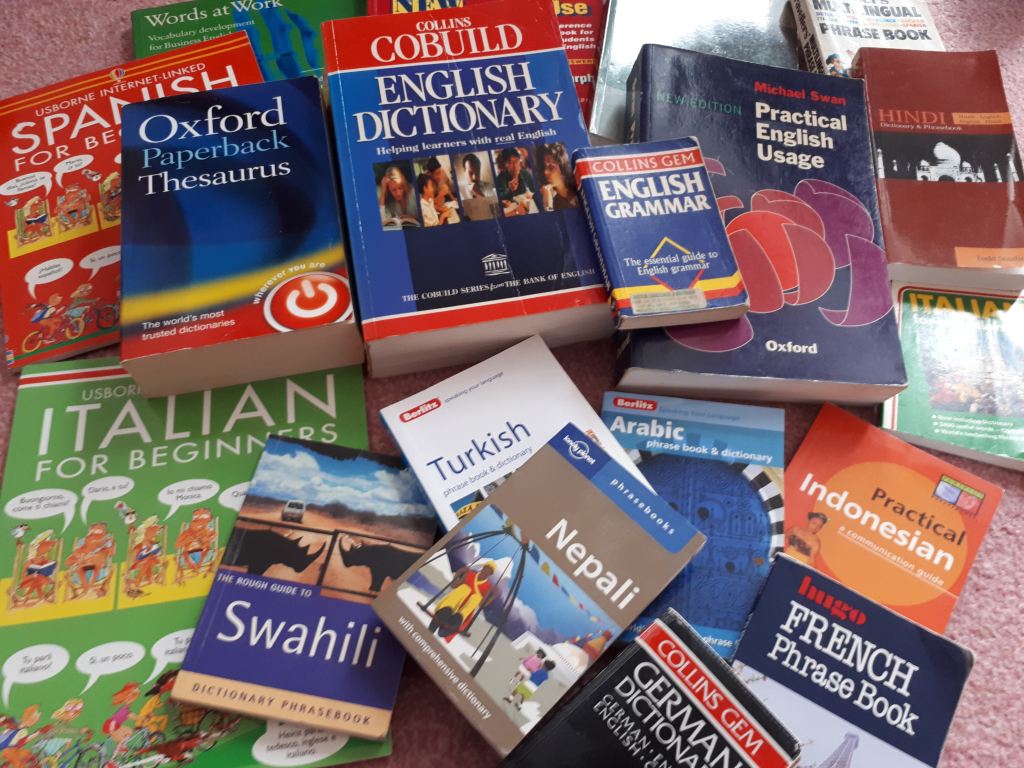
What did we have for our communication needs? Google Translate? No. The internet? No. A personal guide and translator? For the occasional guided tour, yes, but obviously not for the entire 4 months. Pocket dictionary and phrase books? Yes.

However, what we mainly relied upon and were very grateful for was the ubiquity of English. In every country signs were mostly in dual languages, especially where alternative alphabets / scripts were used. Announcements in major Chinese train station – Beijing, Shanghai, Hangzhou, Xi’an were made in Chinese and English. Everywhere we went there were people who either spoke English to a decent level, or were keen to practice (and by default help us find restaurants, bus stations, accommodation etc)…and occasionally fleece us.

Sadly we fell victim to a very obvious scam in Beijing. ‘Kevin Lee,’ enthusiastically befriended us while we were trying to buy tickets for a 16 hour journey to Xi’an. Long story short, we trusted him and his excellent English. He helped us buy 1st class tickets and we bought him lunch. Only later the concierge at a hotel confirmed the tickets were 3rd class. Lesson learned.

I digress.

So we were fortunate to benefit from the desire of so many people to learn English. We used our English to open doors, to help navigate across a large swathe of the world. Speaking English was a necessity. Without it we would have struggled. The only place we did encounter problems due to a lack of people who knew any English was in Eastern Turkey. Not Iran, where so many were enthusiastic learners and pleased to host two young chaps from the UK.

Fast forward to 2024. I am writing this in stifling heat and humidity in central Java, Indonesia. I first arrived in Indonesia in 1997. Still backpacking. The thrill of discovering new places and adventures on remote or lesser travelled islands was mixed with an opportunity to learn a language and quickly. I had a woefully inadequate mini dictionary and a bag full of mistakes but managed to pick up enough Indonesian to survive 2 months travelling. And not just Bali, but places where English was in very limited use.

Nowadays, if I am struggling with the language, a flick through my dogeared mini dictionary and phrase book may yield the appropriate phrase or word. Yet, a few seconds on Google Translate and what I need to say is present on a screen. In fact, I don’t even need to say it. Complete and full understanding. But an absence of any real personal interaction.

It feels to me that learning English or any foreign language is becoming less desirable for the majority of students. Yes, most students are required to learn English (or French or Spanish etc) in their schools, but with communication so quick and easy from online translation services or AI, it is unsurprising students are no longer engaged in learning English in the way they used to be. Post school language learning is sadly in real decline.

I speak Indonesian fluently, so am not reliant on others in helping me out due to a language barrier. But I hope students are still encouraged to continue learning English or other foreign languages at school and afterwards. The world is a wonderful place and the ability to communicate on a personal level (not only via a screen) helps foster empathy, understanding, cultural appreciation and friendships.

I recently spent a few days in Marrakech. A fantastic blend of Arabic, Tamazight (the language of the Berbers) and French culture and language. The one thing you notice in Marrakech is the abundance of western tourists. The local Marrakechis are adept at multi-lingual communication and blend French and Arabic in a delicious linguistic cocktail. The shopkeepers, wily old foxes one and all, are the true linguists. They switch effortlessly between Arabic and French, to English, German, Italian, Spanish. They understand the way to a sale is to be engaging, courteous, humorous, welcoming, open and friendly. They know this is achieved by using language. Creating a connection face to face, not blithely holding out a screen. Dispassionate, disconnected, disastrous for business. Communication has to be something we do from the heart. Using our voice to express emotions and needs, requests and seeking clarification or guidance. Yes, a screen on a smart phone can achieve that.

But there is never the joy of trying a language and seeing the person smile in recognition that you are speaking their language, that they understand and are grateful that you made the effort. It is the same with English. To find someone who has learned the language, is willing to help you and takes pleasure in communicating in a language they have spent time and effort learning – seeing their pleasure – is equally satisfying.

So, yes, Google Translate has its place and I do use it. But as a back-up. My French is pretty shaky, my Arabic is limited, but I thoroughly enjoyed trying to speak with people in Marrakech in their language. And I was equally grateful when people were happy to switch to English. And I found myself smiling with them, not staring at a screen, trying to type the next sentence I needed translated.

My takeaway from recent travels is that language learning is still important, though appears to be diminishing due to the rise in language translation technology. But we must continue to learn each other’s languages. It is what connects us and makes us human.

Shukran, merci, terima kasih…thank you for reading.


Java, Indonesia 🇮🇩
English · language · Learning & Education · Motivation and Change · Student Experience

Back to School…


Today is an important day. The beginning of a new academic year at my daughter’s school. And her final year at school. Time has certainly flown by. I remember her first day at nursery like it was yesterday.

New beginnings for my daughter, in a familiar school, but with a new teacher and class mates. A few nerves and adjustments to make, but I expect she will come home full of excitement to tell us what she has been up to.

New beginnings for me also. A time to refocus on my online teaching business. To work hard to deliver high quality lessons, specifically created for my students. Helping them to achieve their language goals and to fulfill their aspirations utilizing English.

Whether that is a job promotion, or extra responsibilities, dealing with customers, colleagues, clients or negotiating contracts and presenting in meetings, I am determined every student feels more confident in their English.

But my students are not all business focussed. Some want overall general English improvements. Perhaps they are working towards an examination – IELTS/TOEFL/OET or Trinity / Cambridge exams (ISE /SELT / PET / FCE / CAE) in order to go to an overseas university or work in a native English speaking country and secure a work visa.

Other students are keen to improve their level to help on their travels, visiting friends or family in English speaking countries, or are excited about being able to understand films, television programmes, books, magazine articles or podcasts in English.

Every day is a school day. Every day is an opportunity to learn, to improve ourselves and to enrich our knowledge. That is why I am lucky to be an English teacher. I experience the journey alongside my students. Yes, I feel the frustration at times (3rd conditionals…passive vs active voice…gerund and infinitives etc), but I delight in seeing my students improve, make progress and grow in confidence.

My measurement of success is always whether my students have

i) been engaged and interested in each lesson
ii) enjoyed the lesson and left the class smiling
iii) spoken with confidence and without fear of making mistakes

When you enjoy something, you tend to do much better at it. That also includes teaching. I love teaching English and my students have been kind enough to leave many positive reviews and testimonials.

So, is it time for a new beginning for you? Time to commit to learning English, to making the progress you really want.

Let me help you. Get in contact by email at frobisherenglish@gmail.com or via +447464948898 (WhatsApp or message) and I will arrange a FREE 15 minute, no obligation, Zoom call with you. We can discuss your needs and how I can best help you. If you want to take lessons, I can arrange classes at a convenient time to fit around your work and life schedules.

Best wishes,

Tony Frobisher
Owner, teacher and trainer
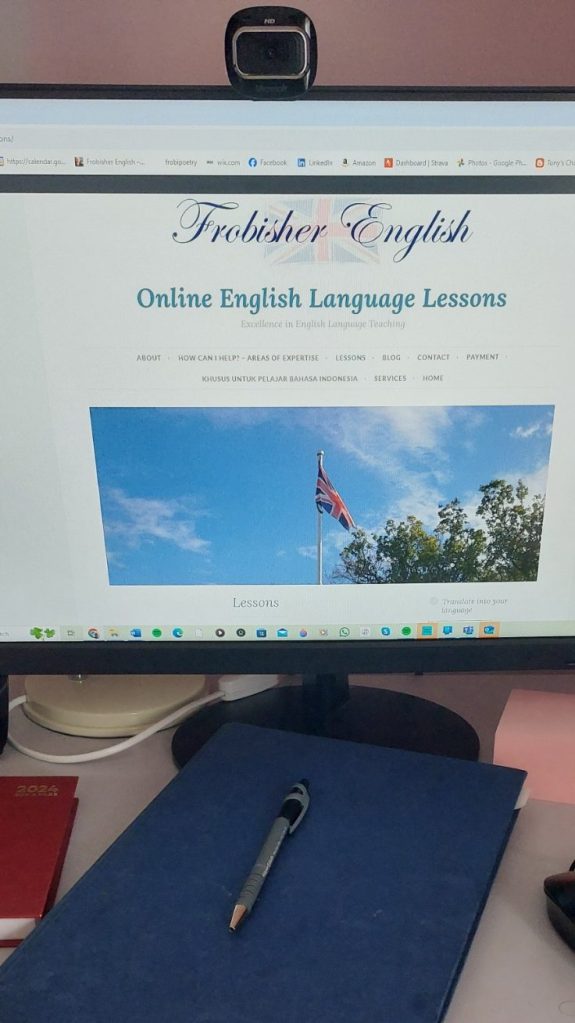
Frobisher English Online English Lessons


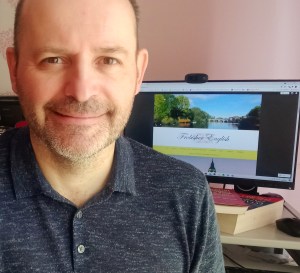
Tony Frobisher has over 27 years of teaching English experience to all levels, ages and backgrounds. He has taught English in Indonesia, Malaysia and the United Kingdom. He holds the DELTA (Diploma in English language Teaching to Adults) as well as a BA (Honours) degree.

frobisherenglish@gmail.com

Business · Business English · English · language · Learning & Education · Motivation and Change

Language Goals

New Year’s Resolutions and how to make them work!

A happy new year! It’s 2023. Another year over, a new one just begun. And what have we done? Well, for many people January 1st is the turning of a fresh page, a new chapter in the book of us. A fresh start and a chance to rethink our goals, ambitions and objectives.

As an English language teacher, I often see friends and colleagues who are not native English speakers, make a promise (a new year’s resolution) to learn and improve their language skills. Often it is the case they have simply not had the time, opportunity or motivation to use English and they have become rusty (out of practice). It is time for them to ‘brush up’ their English – time to practice and improve.

Why should December 31st and January 1st be so inherently different? Why do we feel so renewed and motivated as the clock ticks from 11:59pm to 12am. What a difference a minute makes!

I believe that we all have an internal optimism, that we all have good intentions and a desire to make positive changes in our lives and in the lives of those close to us. January 1st, the new year is a proverbial ‘kick up the backside’ – we feel the urge to get on and do things we intended to do previously, but never got around to. Making new year’s resolutions is a way of committing ourselves to change, signalling that we have goals, motivations and intention. And that makes us feel good.

For a short while anyway.

How long does the intention last? How long do people last before the resolutions are no long resolutions, but broken promises? A few days, a week? In my case I didn’t even get started on my resolution to RED (run everyday in January). Did I feel a tinge of guilt? Yes, but listening to my body and my achy knees I realised it was not a realistic goal. to run everyday would just put undue strain on my knees that have already undergone three operations. So I revised my goal. Run when you can, but be AED (active everyday). Walking as much as possible, cycling, making sure you get out and have fresh air as often as possible.

It is the same with setting a goal to learn or improve your English. Be realistic. If your goal is to take and pass the Cambridge Advanced Examination by February and your level is still at the intermediate stage, it is not practical or possible to achieve this in such a short time. You need to set realistic goals and expectations, e.g

‘By June I will feel much more confident to use English in all situations (work, travel, education, conversation). I will take regular classes and set aside time to self study each week (1-2 hours). By June I expect to be more fluent, have a wider range of vocabulary and better grammar and pronunciation.’

Now that is achievable. Something you can work towards, monitor progress and feel good about as you make progress.

You could set a specific language goal. e.g.

‘I will work towards and deliver a presentation in English at work – target 3-4 months’ or ‘I will have a 30 minute Zoom call in English with a friend and try not to use dictionaries or online translation.’

So set your goals, make your new year resolutions, but be honest and realistic. Choose goals that you can achieve and WANT to achieve. Something that motivates you, makes you feel good, empowered and positive. Share your goals with friends and colleagues, they will be invested and happy to support you.

If you would like to improve your English, for education, for work or for general conversation / travel etc. I have availability and am always happy to take on new students. My courses are designed to be flexible to your needs. I teach classes that are fun, professional and are stress free. I make learning a language a pleasure, motivating and enjoyable – but with real outcomes. You will learn and improve when you learn with me at frobisherenglish.com

Get in touch via frobisherenglish@gmail.com or frobitony1@yahoo.co.uk

Now, you may ask, what are MY new year’s resolutions? Good question. Here they are in no particular order.

  1. AED – be active everyday, stay fit and healthy
  2. Write a new collection of poetry for charity
  3. Start writing my next novel
  4. Continue to try to get my first two novels published!
  5. Enter writing competitions (novels and poetry)
  6. Develop and grow frobisherenglish.com
  7. Read 52 books in 2023, 1 book every week
  8. Be positive, kind and helpful – always
  9. Take on a new fundraising challenge for charity
  10. Not worry so much about things I can’t control

Best wishes for a happy, successful and positive new year and throughout 2023!

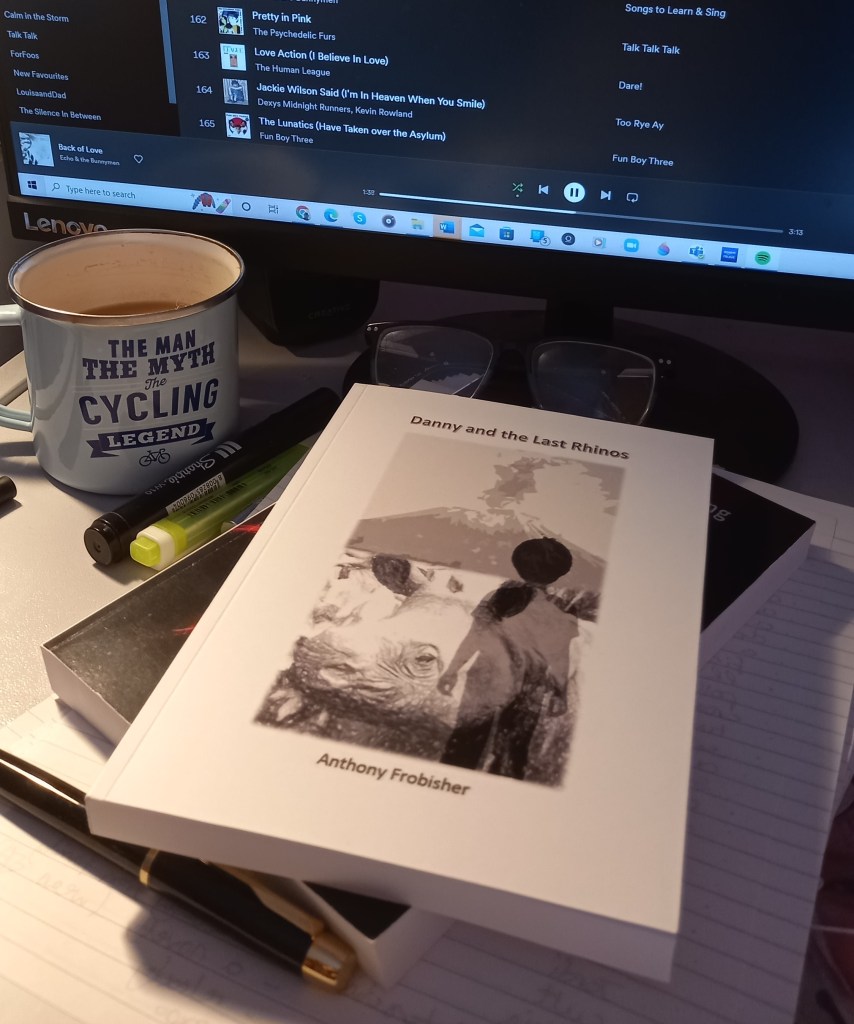
My latest novel, Danny and the Last Rhinos – a book set in Indonesia, for the younger audience 8-12 years olds…
A boy, a tsunami and a rare Javan rhinoceros.

Tony Frobisher, English Language Teacher, Trainer

frobisherenglish,.com

Business English · English · Student Experience

Do You Want to Improve Your English?

How can I improve my level of English quickly?

Who has the experience and knowledge to make me a better speaker of English?

Who can make learning English fun, practical and effective?

The answer is here….

Whatever your language, you can trust me to help you improve your English quickly and effectively.

Contact me for a free introductory online session (15 minutes). If you are a business professional, a university or school student, someone who wants to improve their English to travel or work, I can help YOU.

Send me an email to frobicycles@gmail.com

Best wishes,

Tony Frobisher

Español

¿Cómo puedo mejorar mi nivel de inglés rápidamente?

¿Quién tiene la experiencia y el conocimiento para hacerme un mejor hablante de inglés?

¿Quién puede hacer que aprender inglés sea divertido, práctico y efectivo?

Deutsch

Wie kann ich mein Englischniveau schnell verbessern?

Wer hat die Erfahrung und das Wissen, um mich zu einem besseren Sprecher der englischen Sprache zu machen?

Wer kann Englischlernen unterhaltsam, praktisch und effektiv gestalten?

Français

Comment puis-je améliorer mon niveau d’anglais rapidement ?

Qui a l’expérience et les connaissances pour faire de moi un meilleur locuteur de l’anglais ?

Qui peut rendre l’apprentissage de l’anglais amusant, pratique et efficace ?

Italiano

Come posso migliorare rapidamente il mio livello di inglese?

Chi ha l’esperienza e le conoscenze per farmi parlare meglio l’inglese?

Chi può rendere l’apprendimento dell’inglese divertente, pratico ed efficace?

Bahasa Indonesia

Bagaimana saya bisa meningkatkan level bahasa Inggris saya dengan cepat?

Siapa yang memiliki pengalaman dan pengetahuan untuk menjadikan saya pembicara bahasa Inggris yang lebih baik?

Siapa yang bisa membuat belajar bahasa Inggris menyenangkan, praktis dan efektif?

中国人

如何快速提高英语水平?

谁有经验和知识让我成为更好的英语演讲者?

谁能让学习英语变得有趣、实用和有效?

日本

どうすれば英語のレベルをすばやく上げることができますか?

私を英語を上手に話せるようにするための経験と知識を持っているのは誰ですか?

誰が英語学習を楽しく、実用的かつ効果的にすることができますか?

한국인

어떻게 하면 영어 수준을 빨리 향상시킬 수 있습니까?

누가 나를 더 나은 영어 구사자로 만드는 경험과 지식을 가지고 있습니까?

누가 영어 학습을 재미있고 실용적이며 효과적으로 만들 수 있습니까?

عربي

كيف يمكنني تحسين مستواي في اللغة الإنجليزية بسرعة؟

من لديه الخبرة والمعرفة التي تجعلني متحدثًا أفضل للغة الإنجليزية؟

من يمكنه جعل تعلم اللغة الإنجليزية ممتعًا وعمليًا وفعالًا؟

Learning & Education · Student Experience · Teaching Methodology

Mistakes – I’ve Made a Few

MISTAKES!!!!!!

Mistakes. The scourge of the student. The fear of all language learners. A reason for shyness, for feeling inadequate, a reason perhaps to give up.

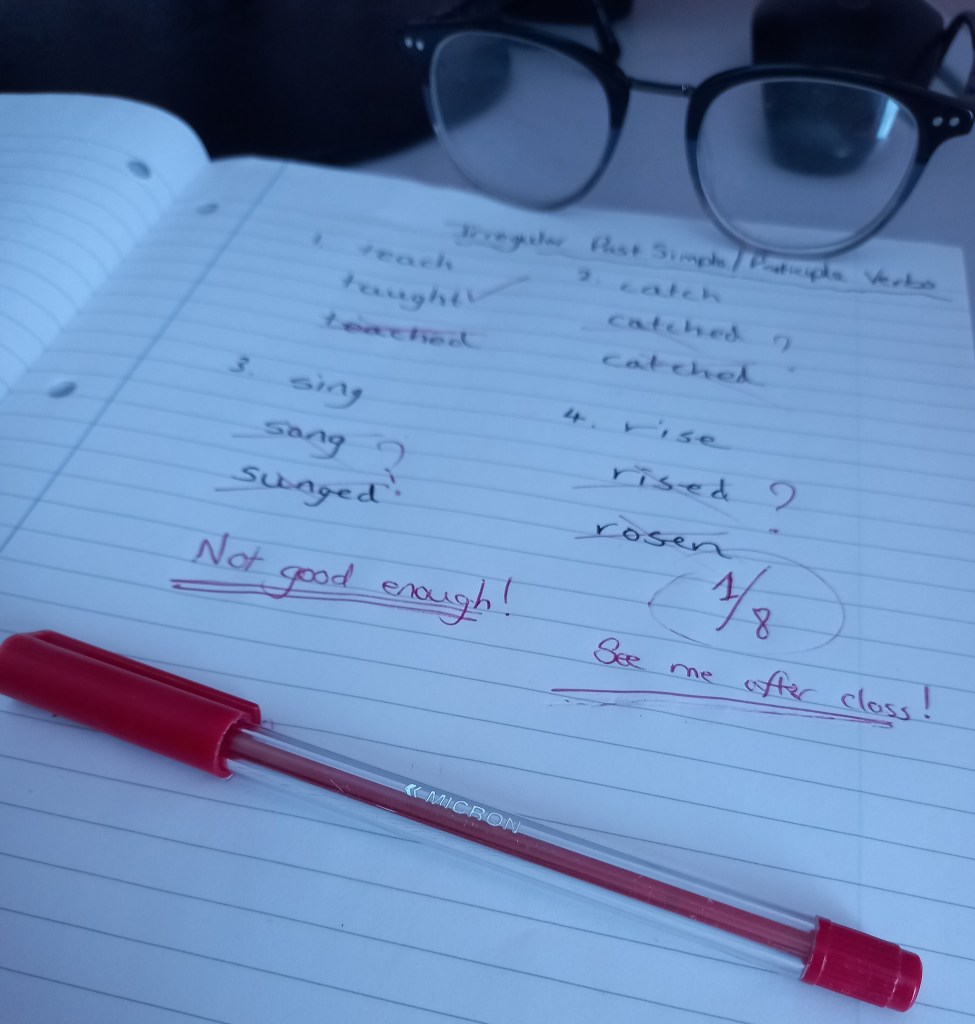
How many times at school did you receive a test back from your teacher? Over your page is a spider’s scrawl of red ink. INCORRECT. WRONG. SEE ME AFTER CLASS!!!! The fear wells up inside you as you expect to be yelled at, made to feel stupid for getting things wrong and even worse, humiliated in front of your friends and school mates.

Aren’t teachers supposed to be educating, nurturing and developing young minds?Surely the best and most effective way is to create a culture of trust and respect and environment that is conducive to learning. Not one that is borne out of some perverse power and ego trip that puts the teacher as the font of all knowledge, to be obeyed and respected through fear, like some despotic dictator. I still remember teachers at school who I feared being in a classroom with. Fear of their temper, fear of making a mistake and fear of never being good enough.

Then again, I remember even more those teachers who were the opposite. Who garnered respect through encouragement, patience and a willingness to help those who found particular subjects or ideas difficult to comprehend. When you made a mistake, they did not single you out or belittle you. Rather they would go over things again, possibly with the assistance of a more capable student. They would demonstrate, illustrate, provide clear and easy to understand examples, but crucially, they allowed you to try again. And would not scold you for making the same mistake again – but they understood you would eventually get it. Given time and the right environment for learning, all students would be able to understand even complicated theories and ideas – but everyone has a different potential for learning and critically, a different speed at which they can assimilate ideas and develop.

Learning anything is not a linear, equal process. I was excellent at geography, won a school prize in the subject, went on to study it at university. I picked up everything without difficulty (except for scientific equations in geomorphology….my Kryptonite). But put me in front of a physics or chemistry text book and it was like learning Chinese or Arabic or Russian. Like a different alphabet and language altogether. I still struggled, but I had patient teachers who assisted, rather than cajoled and pressured me to learn.

The teacher is not always right.

Learning English – Mistakes Are Positive Things

I have now taught English as a Foreign Language for 25 years. And I am confident that every lesson I have taught has contained a myriad of mistakes. From my students, of course. But also inadvertent mistakes by myself. Spelling errors, a mispronunciation with syllable stress, a poorly worded explanation as I could not remember what the word meant (only for a moment or two). But these mistakes are all part of being human. We are not robots, we aspire to but never reach perfection. Mistakes make us human. I would quickly rectify my mistakes and would not hide away from them. If a student pointed out I had accidentally spelled a word wrong (government / environment were always my Achilles heel…n before m please!) I would say, ‘Excellent, well done, you found the deliberate mistake today’ and then go on to say it just shows that

‘Mistakes are normal, to be expected and nothing we need to be ashamed of.’

If I could not think of the correct way to explain a word, or Heaven forbid, I was presented with a word that I was unsure of the meaning of, for example ‘disestablishmentarianism’ I would not try and bluff out some contrived definition. I would say,

‘One moment, let me check in the dictionary. Because that’s what dictionaries are for. To help us out when we don’t know a word. Because, contrary to popular belief, I don’t know EVERY. SINGLE. WORD. in the English language.’

Humanising Mistakes

I have taught students who were so afraid of making mistakes when speaking, that they clammed up entirely and hardly said a word in their first class with me. Despite my best efforts to elicit responses, to encourage and create a friendly, unintimidating atmosphere, they were sometimes just completely overawed. At the end of the class I would ask to talk to them and explain about the ‘importance of making mistakes.’ Sometimes I had to console a student who had broken down in tears. But I always pointed out that

‘If you don’t make mistakes, there is no need for you to be here. You would be speaking perfectly and in no need of English lessons. Mistakes are natural, normal and we all make them. But when you make a mistake, it is my job to identify and help you correct it – and to help you become aware of the mistake, so you learn and hopefully eliminate it. I can’t guarantee you won’t make the mistake again, but eventually the mistake will disappear.’

Then the student would have a light bulb moment and realise what I said made sense. They would depart with a happy ‘Thank you for teach me (sic)

Mistakes Are Positives – Not Negatives

Why are mistakes positives?

  • Mistakes are essential for students to learn and develop. They learn from other students when they mistakes and their class mates will help correct the mistakes they make. It is a mutual benefit.
  • Students are not stupid. There is a feeling sometimes that because a student is a low level in an English language class, they are not that bright. I have had brilliant business leaders, scientists, engineers, lawyers, doctors etc, all with a lower level in English. Making mistakes in their normal everyday working life is something they are not expect to do. Helping them feel empowered to make mistakes in language learning is liberating.
  • Making mistakes leads to learning and self improvement. Every time a student makes a mistake, self-corrects, or is assisted in correcting their error, it is another step in the language learning journey. Making mistakes and finding the correct answer helps embed new language, grammar points, pronunciation etc, in their short term and then long term memory
  • Making mistakes can be memorable and fun! When I first learned Indonesian, I remember talking to a street food vendor. I asked her for a cup of tea, without sugar. I said, ‘Satu cangkir teh, tampa gila.’ instead of ‘Satu cangkir teh, tampa gula.’ Gila means crazy and gula means sugar. She laughed, I laughed and I immediately learned the difference between gila and gula and I didn’t make that mistake again.
  • Mistakes create empathy through shared experience. We have all been there, making mistakes as we learn language, a new skill, a musical instrument, a new job. But then again, so have the people around us. No one steps into the language classroom, the new office, or picks up the guitar or violin or plays the piano for the first time without making mistakes. Mistakes ground us, but also connect us to our peers. In turn, as we develop and improve, we can show empathy for those who learn after us.

So, go ahead, make mistakes (but if you are an English language teacher, a music teacher, a dance teacher or any kind of teacher, preparation is the key to reducing mistakes.) But be honest and human about it. Your students will respect you much more if you are honest about mistakes, that you make them and that you are not perfect. No student expects their teacher to be perfect. Instead, they expect dedication, commitment, respect, understanding, empathy, honesty, kindness, integrity, knowledge, patience, trust and to finish every class having learned something.

And if they feel comfortable to make mistakes during each class, not because they were intent on making mistakes, more that they were accidental or through misunderstanding, they will feel able to grow, learn and develop with you.

And you will earn a lot of respect for enabling and nurturing them to do so.