English · language · Learning & Education · Motivation and Change · Student Experience

Back to School…


Today is an important day. The beginning of a new academic year at my daughter’s school. And her final year at school. Time has certainly flown by. I remember her first day at nursery like it was yesterday.

New beginnings for my daughter, in a familiar school, but with a new teacher and class mates. A few nerves and adjustments to make, but I expect she will come home full of excitement to tell us what she has been up to.

New beginnings for me also. A time to refocus on my online teaching business. To work hard to deliver high quality lessons, specifically created for my students. Helping them to achieve their language goals and to fulfill their aspirations utilizing English.

Whether that is a job promotion, or extra responsibilities, dealing with customers, colleagues, clients or negotiating contracts and presenting in meetings, I am determined every student feels more confident in their English.

But my students are not all business focussed. Some want overall general English improvements. Perhaps they are working towards an examination – IELTS/TOEFL/OET or Trinity / Cambridge exams (ISE /SELT / PET / FCE / CAE) in order to go to an overseas university or work in a native English speaking country and secure a work visa.

Other students are keen to improve their level to help on their travels, visiting friends or family in English speaking countries, or are excited about being able to understand films, television programmes, books, magazine articles or podcasts in English.

Every day is a school day. Every day is an opportunity to learn, to improve ourselves and to enrich our knowledge. That is why I am lucky to be an English teacher. I experience the journey alongside my students. Yes, I feel the frustration at times (3rd conditionals…passive vs active voice…gerund and infinitives etc), but I delight in seeing my students improve, make progress and grow in confidence.

My measurement of success is always whether my students have

i) been engaged and interested in each lesson
ii) enjoyed the lesson and left the class smiling
iii) spoken with confidence and without fear of making mistakes

When you enjoy something, you tend to do much better at it. That also includes teaching. I love teaching English and my students have been kind enough to leave many positive reviews and testimonials.

So, is it time for a new beginning for you? Time to commit to learning English, to making the progress you really want.

Let me help you. Get in contact by email at frobisherenglish@gmail.com or via +447464948898 (WhatsApp or message) and I will arrange a FREE 15 minute, no obligation, Zoom call with you. We can discuss your needs and how I can best help you. If you want to take lessons, I can arrange classes at a convenient time to fit around your work and life schedules.

Best wishes,

Tony Frobisher
Owner, teacher and trainer
Frobisher English Online English Lessons


Tony Frobisher has over 27 years of teaching English experience to all levels, ages and backgrounds. He has taught English in Indonesia, Malaysia and the United Kingdom. He holds the DELTA (Diploma in English language Teaching to Adults) as well as a BA (Honours) degree.

frobisherenglish@gmail.com

Business English · English · language · Learning & Education

Frobisher English

Learn English Online & Reach Your Potential

Online English lessons – ‘Excellence in English Language Teaching’

Tony Frobisher, Worcester, UK
BA (Hons.) Diploma in English Language Teaching to Adults (DELTA)

  • Highly experienced & qualified native English language teacher
  • 27 years English teaching experience in Indonesia, Malaysia and the UK
  • Specialist in Business English teaching to industry professionals
  • Runner up EBET – Excellence in Business English Teaching 
  • Teaching all levels, backgrounds and interests – academic, business and general English

The following English lessons are available 

  • One : One English lessons via Microsoft Teams, Zoom, Google Meet or Skype 
  • Group conversation courses, all levels, from beginner to advanced
  • Children’s Conversation Classes – get your children talking English!
  • Exam tuition & preparation (Trinity ISE / B1 Skilled Worker Visa Test / IELTS, TOEFL, OET, Cambridge Exams PET/FCE/CAE)
  • Business English Lessons – covering business skills and personal development training. Using English effectively in work situations, from negotiations to cultural awareness training, business presentation development and fine tuning, meetings preparation, interview skills and preparation
  • Mentoring – As a DELTA qualified teacher with more than 27 years experience, I am experienced to advise and assist newly qualified TEFL teachers on any aspect of teaching English. Including methodology, classroom techniques, development and confidence building, effective planning, resource development etc.
  • English language development and assistance for students – University essay critique and advice, dissertation advice,
  • Proofreading for students, academia and business professionals – ensure accuracy in your written work. 
Video Introduction to Frobisher English
Business · Business English · English · language · Learning & Education · Motivation and Change

Language Goals

New Year’s Resolutions and how to make them work!

A happy new year! It’s 2023. Another year over, a new one just begun. And what have we done? Well, for many people January 1st is the turning of a fresh page, a new chapter in the book of us. A fresh start and a chance to rethink our goals, ambitions and objectives.

As an English language teacher, I often see friends and colleagues who are not native English speakers, make a promise (a new year’s resolution) to learn and improve their language skills. Often it is the case they have simply not had the time, opportunity or motivation to use English and they have become rusty (out of practice). It is time for them to ‘brush up’ their English – time to practice and improve.

Why should December 31st and January 1st be so inherently different? Why do we feel so renewed and motivated as the clock ticks from 11:59pm to 12am. What a difference a minute makes!

I believe that we all have an internal optimism, that we all have good intentions and a desire to make positive changes in our lives and in the lives of those close to us. January 1st, the new year is a proverbial ‘kick up the backside’ – we feel the urge to get on and do things we intended to do previously, but never got around to. Making new year’s resolutions is a way of committing ourselves to change, signalling that we have goals, motivations and intention. And that makes us feel good.

For a short while anyway.

How long does the intention last? How long do people last before the resolutions are no long resolutions, but broken promises? A few days, a week? In my case I didn’t even get started on my resolution to RED (run everyday in January). Did I feel a tinge of guilt? Yes, but listening to my body and my achy knees I realised it was not a realistic goal. to run everyday would just put undue strain on my knees that have already undergone three operations. So I revised my goal. Run when you can, but be AED (active everyday). Walking as much as possible, cycling, making sure you get out and have fresh air as often as possible.

It is the same with setting a goal to learn or improve your English. Be realistic. If your goal is to take and pass the Cambridge Advanced Examination by February and your level is still at the intermediate stage, it is not practical or possible to achieve this in such a short time. You need to set realistic goals and expectations, e.g

‘By June I will feel much more confident to use English in all situations (work, travel, education, conversation). I will take regular classes and set aside time to self study each week (1-2 hours). By June I expect to be more fluent, have a wider range of vocabulary and better grammar and pronunciation.’

Now that is achievable. Something you can work towards, monitor progress and feel good about as you make progress.

You could set a specific language goal. e.g.

‘I will work towards and deliver a presentation in English at work – target 3-4 months’ or ‘I will have a 30 minute Zoom call in English with a friend and try not to use dictionaries or online translation.’

So set your goals, make your new year resolutions, but be honest and realistic. Choose goals that you can achieve and WANT to achieve. Something that motivates you, makes you feel good, empowered and positive. Share your goals with friends and colleagues, they will be invested and happy to support you.

If you would like to improve your English, for education, for work or for general conversation / travel etc. I have availability and am always happy to take on new students. My courses are designed to be flexible to your needs. I teach classes that are fun, professional and are stress free. I make learning a language a pleasure, motivating and enjoyable – but with real outcomes. You will learn and improve when you learn with me at frobisherenglish.com

Get in touch via frobisherenglish@gmail.com or frobitony1@yahoo.co.uk

Now, you may ask, what are MY new year’s resolutions? Good question. Here they are in no particular order.

  1. AED – be active everyday, stay fit and healthy
  2. Write a new collection of poetry for charity
  3. Start writing my next novel
  4. Continue to try to get my first two novels published!
  5. Enter writing competitions (novels and poetry)
  6. Develop and grow frobisherenglish.com
  7. Read 52 books in 2023, 1 book every week
  8. Be positive, kind and helpful – always
  9. Take on a new fundraising challenge for charity
  10. Not worry so much about things I can’t control

Best wishes for a happy, successful and positive new year and throughout 2023!

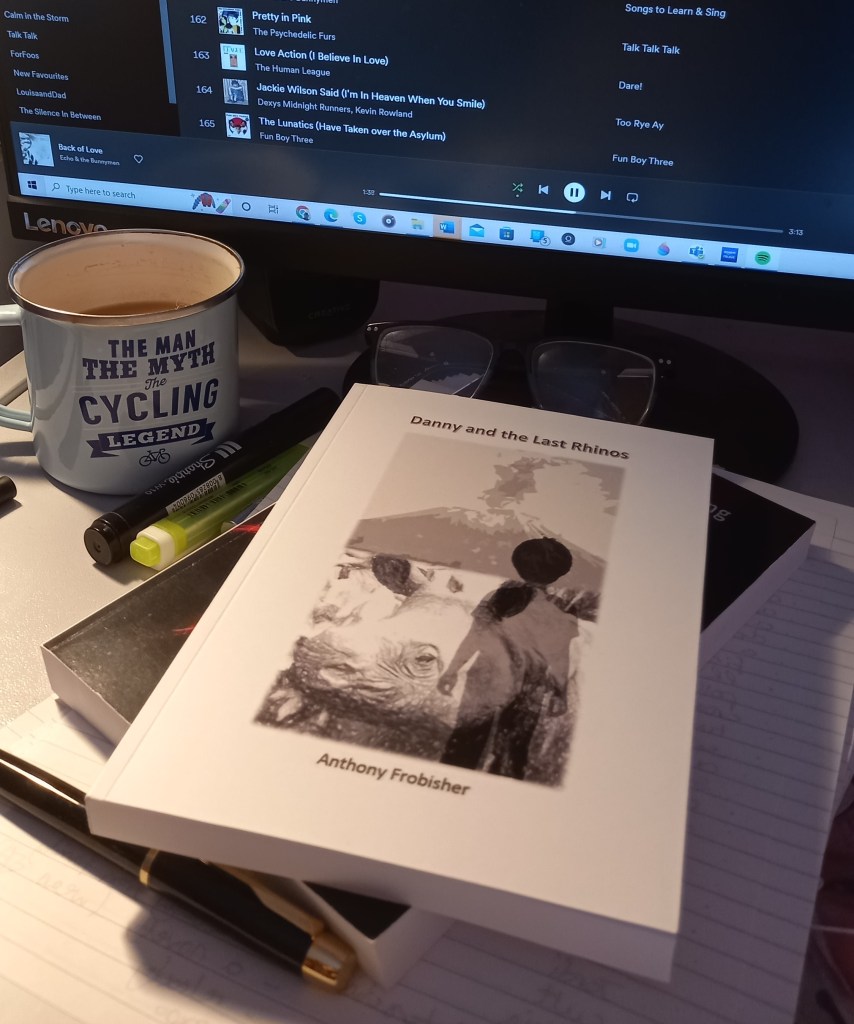
My latest novel, Danny and the Last Rhinos – a book set in Indonesia, for the younger audience 8-12 years olds…
A boy, a tsunami and a rare Javan rhinoceros.

Tony Frobisher, English Language Teacher, Trainer

frobisherenglish,.com

Learning & Education · Student Experience · Teaching Methodology

Mistakes – I’ve Made a Few

MISTAKES!!!!!!

Mistakes. The scourge of the student. The fear of all language learners. A reason for shyness, for feeling inadequate, a reason perhaps to give up.

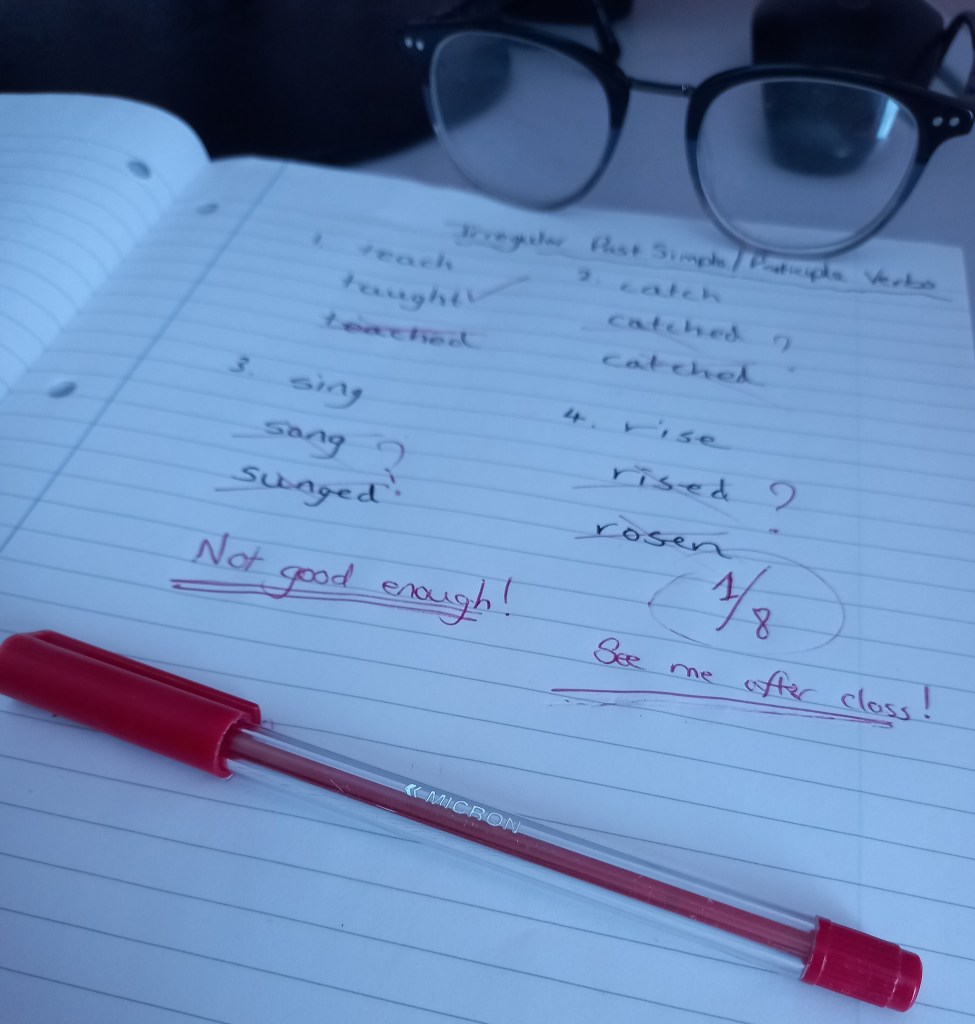
How many times at school did you receive a test back from your teacher? Over your page is a spider’s scrawl of red ink. INCORRECT. WRONG. SEE ME AFTER CLASS!!!! The fear wells up inside you as you expect to be yelled at, made to feel stupid for getting things wrong and even worse, humiliated in front of your friends and school mates.

Aren’t teachers supposed to be educating, nurturing and developing young minds?Surely the best and most effective way is to create a culture of trust and respect and environment that is conducive to learning. Not one that is borne out of some perverse power and ego trip that puts the teacher as the font of all knowledge, to be obeyed and respected through fear, like some despotic dictator. I still remember teachers at school who I feared being in a classroom with. Fear of their temper, fear of making a mistake and fear of never being good enough.

Then again, I remember even more those teachers who were the opposite. Who garnered respect through encouragement, patience and a willingness to help those who found particular subjects or ideas difficult to comprehend. When you made a mistake, they did not single you out or belittle you. Rather they would go over things again, possibly with the assistance of a more capable student. They would demonstrate, illustrate, provide clear and easy to understand examples, but crucially, they allowed you to try again. And would not scold you for making the same mistake again – but they understood you would eventually get it. Given time and the right environment for learning, all students would be able to understand even complicated theories and ideas – but everyone has a different potential for learning and critically, a different speed at which they can assimilate ideas and develop.

Learning anything is not a linear, equal process. I was excellent at geography, won a school prize in the subject, went on to study it at university. I picked up everything without difficulty (except for scientific equations in geomorphology….my Kryptonite). But put me in front of a physics or chemistry text book and it was like learning Chinese or Arabic or Russian. Like a different alphabet and language altogether. I still struggled, but I had patient teachers who assisted, rather than cajoled and pressured me to learn.

The teacher is not always right.

Learning English – Mistakes Are Positive Things

I have now taught English as a Foreign Language for 25 years. And I am confident that every lesson I have taught has contained a myriad of mistakes. From my students, of course. But also inadvertent mistakes by myself. Spelling errors, a mispronunciation with syllable stress, a poorly worded explanation as I could not remember what the word meant (only for a moment or two). But these mistakes are all part of being human. We are not robots, we aspire to but never reach perfection. Mistakes make us human. I would quickly rectify my mistakes and would not hide away from them. If a student pointed out I had accidentally spelled a word wrong (government / environment were always my Achilles heel…n before m please!) I would say, ‘Excellent, well done, you found the deliberate mistake today’ and then go on to say it just shows that

‘Mistakes are normal, to be expected and nothing we need to be ashamed of.’

If I could not think of the correct way to explain a word, or Heaven forbid, I was presented with a word that I was unsure of the meaning of, for example ‘disestablishmentarianism’ I would not try and bluff out some contrived definition. I would say,

‘One moment, let me check in the dictionary. Because that’s what dictionaries are for. To help us out when we don’t know a word. Because, contrary to popular belief, I don’t know EVERY. SINGLE. WORD. in the English language.’

Humanising Mistakes

I have taught students who were so afraid of making mistakes when speaking, that they clammed up entirely and hardly said a word in their first class with me. Despite my best efforts to elicit responses, to encourage and create a friendly, unintimidating atmosphere, they were sometimes just completely overawed. At the end of the class I would ask to talk to them and explain about the ‘importance of making mistakes.’ Sometimes I had to console a student who had broken down in tears. But I always pointed out that

‘If you don’t make mistakes, there is no need for you to be here. You would be speaking perfectly and in no need of English lessons. Mistakes are natural, normal and we all make them. But when you make a mistake, it is my job to identify and help you correct it – and to help you become aware of the mistake, so you learn and hopefully eliminate it. I can’t guarantee you won’t make the mistake again, but eventually the mistake will disappear.’

Then the student would have a light bulb moment and realise what I said made sense. They would depart with a happy ‘Thank you for teach me (sic)

Mistakes Are Positives – Not Negatives

Why are mistakes positives?

  • Mistakes are essential for students to learn and develop. They learn from other students when they mistakes and their class mates will help correct the mistakes they make. It is a mutual benefit.
  • Students are not stupid. There is a feeling sometimes that because a student is a low level in an English language class, they are not that bright. I have had brilliant business leaders, scientists, engineers, lawyers, doctors etc, all with a lower level in English. Making mistakes in their normal everyday working life is something they are not expect to do. Helping them feel empowered to make mistakes in language learning is liberating.
  • Making mistakes leads to learning and self improvement. Every time a student makes a mistake, self-corrects, or is assisted in correcting their error, it is another step in the language learning journey. Making mistakes and finding the correct answer helps embed new language, grammar points, pronunciation etc, in their short term and then long term memory
  • Making mistakes can be memorable and fun! When I first learned Indonesian, I remember talking to a street food vendor. I asked her for a cup of tea, without sugar. I said, ‘Satu cangkir teh, tampa gila.’ instead of ‘Satu cangkir teh, tampa gula.’ Gila means crazy and gula means sugar. She laughed, I laughed and I immediately learned the difference between gila and gula and I didn’t make that mistake again.
  • Mistakes create empathy through shared experience. We have all been there, making mistakes as we learn language, a new skill, a musical instrument, a new job. But then again, so have the people around us. No one steps into the language classroom, the new office, or picks up the guitar or violin or plays the piano for the first time without making mistakes. Mistakes ground us, but also connect us to our peers. In turn, as we develop and improve, we can show empathy for those who learn after us.

So, go ahead, make mistakes (but if you are an English language teacher, a music teacher, a dance teacher or any kind of teacher, preparation is the key to reducing mistakes.) But be honest and human about it. Your students will respect you much more if you are honest about mistakes, that you make them and that you are not perfect. No student expects their teacher to be perfect. Instead, they expect dedication, commitment, respect, understanding, empathy, honesty, kindness, integrity, knowledge, patience, trust and to finish every class having learned something.

And if they feel comfortable to make mistakes during each class, not because they were intent on making mistakes, more that they were accidental or through misunderstanding, they will feel able to grow, learn and develop with you.

And you will earn a lot of respect for enabling and nurturing them to do so.

Learning & Education · Poetry and Writing · Travel

I want to write….But first you must read

20181022_133947

The written word is a splendid thing. It sits upon a page, decorating the paper in permanent ink, or it graces the screen, released from the confines of the keyboard, strung into prose by the creative, inquisitive, thoughtful mind.

I have long wished to write, professionally, personally, for payment or for pleasure. Writing is that most cherished of arts. An ability to share ideas and to connect with people far and beyond, in different towns and cities, cultures and countries. To have your thoughts impress, challenge, influence, please, entertain and create an emotional response from your readers.

But for one reason and another, I never had the time or the inclination to dedicate myself to writing. A career spent working 70 hours a week in the railway, the tiredness of the daily commute to London and back, travelling on business to Manchester, Birmingham, Glasgow….Holyhead (er, yes. Holyhead. The Isle of Anglesey, North Wales. Next stop Dublin, Ireland. Great place to visit, but my word it is a long way there and back.) Then an extended period abroad, around 6 years of travel and teaching in South East Asia. A period in my life where I taught English, shared our beautiful language and helped others learn and discover its delights, as well as trying to demystify its complexities (still trying….it is a fiendishly complex language). But I taught English. I didn’t write it. However, what long periods spent travelling vast distances by train and bus and boat gives you is time to fill. Which other than looking out on majestic landscapes, passing people you would never meet and remarking on how different their life must be, you often spent a lot of time reading.

I travelled extensively from 1996 to 1998, before settling in Indonesia to teach English. In that 2 year period I travelled from Hong Kong to Athens overland, via China, Pakistan, Iran, Turkey and Greece. I then travelled around India. Sri Lanka, Thailand, Vietnam, Cambodia, Indonesia, Australia and Singapore.

This was the pre Kindle era. In fact the pre Internet period. Only in the latter part of the century was the internet developing as a key and implicit tool in every aspect of our lives. But back then, 20, 22 years ago, travel was a blissfully disconnected experience. No Instagramming your favourite temple and uploading it to your 3 million followers, no Facebook albums of every meal you ate for the last month. Even a phone call had to be done from an IDD phone booth, none of this Skype or WhatsApp video calling. The future had yet to arrive.

So to travel unencumbered by technology and by instant connection to the world ‘back home’, was incredibly liberating. Time was present and you had to fill it. Not by endless, mindless scrolling through Twitter feeds and Instagram stories. I say unencumbered, but before the iPod or MP3 player, I would be loaded with cheap cassettes bought in markets in Quetta or Xi’an or Antalya. And that brings me to books.

Books were the mainstay of travelling. I devoured as many books as possible. I sought out backpacker second hand book shops, or exchanged them with fellow travellers. I read and read and read. Sure, my backpack was a weighty affair, loaded with 5 or 6 books. Not the Kindle of today with hundreds of titles stored on it. I would have loved to have travelled with a Kindle. But I don’t think I would have seen any of the countries I was travelling through. Books were there to pass the time that was not fulfilled with the pleasures of travel. The joy of discovering a new city, of getting lost in labyrinthine back streets, finding a cafe populated by friendly , welcoming locals with whom you shared no common language  (today, just ask google to translate…where is the fun in that?). When night fell on a long train journey, books were there to pass the time. And what a joy they were to have. Travel can be immensely boring. Sorry to disappoint you. But it can. Try travelling for 60 hours from Xian in central China to Urumqi in the far north west of China. 60 hours. One train, through the featureless Gobi desert. You see one impressive set of dunes, you have seen them all. And how many games of ‘Shithead’ can you play in 60 hours? (Actually my great friend and travel partner Simon and I played marathon sessions of shithead – it is a popular card among backpackers. Well it used to be. I expect everyone it too busy on their phones now.)

Every travelogue written or documentary made will inevitably distill the journey to its salient and most interesting parts. The incidents, good and bad, the highlights, the sights, the most memorable and interesting people and conversations. But they rarely emphasize the tedium of long, hot (or cold), seemingly endless, interminable journeys through landscapes that do not scintillate, enrapture, enthrall or amaze. And I am 100% confident that the authors and documentary makers fill these voids with reading.

I have digressed a touch. My travels were enriching and enlightening. But without an array of reading material, it would have felt far more uninspiring, much more of a hardship. And travel should wherever possible, be something that gives pleasure and experience to remember and share. There are a few hardy souls who deliberately set out to experience travel in the raw. I met someone who was travelling overland from the UK to India and had £1,000 for everything. Every meal, every bus ticket, every hotel. He was dishevelled, looked like he had been dragged through a hedge backwards and looked as if he hadn’t eaten a decent meal for weeks. Indeed, you can travel very cheaply and £1,000 can get you a hell of a long way in places like Turkey and Iran and Pakistan. But I asked if he was enjoying his trip – sans comfort. Oh yes, it’s great! It takes all sorts. I experienced discomfort on many occasions. I endured long, uncomfortable journeys on overcrowded, overheating trains. I endured, but ejoyed the retelling later. A little discomfort is inevitable and should be embraced from time to time. But not every single day, every single trip, every single meal, or rough, flea-bitten hostel.  Yet he loved the discomfort, the rawness of the experience, the up close and personal, being one with the people he met, from the poorest villager and farmer to the middle class civil servant on a train. He was devoid of possessions, carried only a few clothes in a beaten up rucksack. But he read. He carried books and they helped carry him on his journey.

Since returning to the UK in 2002 my life has been one of immense challenge and difficulties. Our children were born 16 weeks prematurely. We had triplets, one of whom, Jewel, passed away after 17 days. Our other daughters Milla and Louisa were in hospital for 6 months. Milla had severe cerebral palsy and passed away in December 2016 aged 10. Louisa is doing really well and is now 12. She has sight problems caused by her premature birth; partially sighted in her right eye and blind in her left.

The stress and exhaustion of caring for our daughters put pay to any aspirations I had to write. It also severely limited my reading opportunities. Our evenings were constantly devoted to caring for Louisa and Milla, our days spent working and trying to function through a fug of tiredness. The moment I picked up a book to read, my eyes would glaze over and my eyelids became immediately heavy. I would be asleep in seconds.

But today I am able to give more time to writing. I am two thirds of my way through completing a novel. I have written an extensive range of poetry which can be seen on my other website or on instagram (@ajfrobisherpoetry) . Later this year two of my poems will be published in an anthology of poetry.

Writing is cathartic, an escape, a release and a way of expressing myself. I value the opportunity I have to write. But without the hundreds of books I have read, I would not be sitting writing this blog, my poetry or my novel. I have met people who proudly proclaim, ‘Books, nah, I have never read a book’. As if that is some sort of badge of honour, a decoration of the illiterati, something to trumpet and smile about. So much time is invested into our education, a free education at that. To have been given that chance to learn to read and then throw it away dismissively smacks of extreme arrogance and laziness. To read is to discover. My daughter Louisa has struggled to read. Her level of sight impairment is so pronounced that it has been detrimental to a ‘normal’ education. However, after years of patient dedicated assistance at her special need primary and secondary schools, last year at the age of 11, she made a huge step and began to recognise words. Then sentences, and eventually able to read paragraphs. It was incredible to witness and something we feared may not happen.

To read is to discover, no matter that it has taken years to reach this point. She is now discovering and able to do so herself. Not idly dismissing books as something uninteresting and unimportant.

So now I pride myself on being able to write, but also to have access to so many amazing authors and writers. To be able to consider opinions and ideas and to formulate my own in response, or separate to them. To be able to read a book and allow it to influence my thought process or not. To help me consider the words I choose to write and the purpose of them. The importance of what I wish to say.  The relevance to those who may choose to read them.

I now take pleasure from dipping into poetry books and savouring the sentences and poems crafted so intricately. To read and learn of Japanese philosophy, to understand the ideas of silence and mindfulness, to consider and challenge my own problems with anxiety, to escape into fiction.

To read is to discover, but to read is also to write. And long may it continue to be.

As Morrissey once said,

“There’s more to life than books you know, but not much more.”

Best wishes,

Tony