English · language · Learning & Education · Pronunciation

The Beauty of Accents

Gud afterrnuun. Wilcum to Norn Iron.

I come in PRAISE of accents, not to slate them.

Wait. Before you start shouting at me for vilifying the Northern Irish accent, let me state on record, that is one of my favourite accents in the British Isles. Together with Scouse and Geordie (for the uninitiated, people from Liverpool and Newcastle).

My wife and I recently visited Northern Ireland for the first time. The country was beautiful, the scenery breathtaking, the welcome warm and friendly, the people generous and kind. Everything I had heard and hoped would be the case. I was not disappointed. But to hear the Northern Irish accent, its rich tones and elongated vowels, its wonderful pitch from a lofty high to a guttural low, to hear the accent in situ, was magnificent. It made me want to just sit in Costa nursing a large cappuccino and listen to the soundscape around me, drowning in the mellifluous tones of that gorgeous accent.

You see, accent for me is an enhancement to place, a badge of identity and of belonging. A kinship and a sense of pride. The Northern Irish are a people with fierce pride in their homeland. Sadly, for a long period of history, a fierce pride that escalated to bloodshed, bombing, civil unrest and a very dark episode that left no one unaffected. Identity and belonging is an intrinsic part of the human make up. We all want to belong and we all want to be able to have and to share our identity. The people of Northern Ireland fought over sovereignty, over nationhood, whether to be part of a unified political state (Eire, Ireland, joining together politically with the south of Ireland) or to maintain its place within the United Kingdom, allied to Westminster and the government in London. But the one thing everyone in Northern Ireland maintained was their sense of identity and place. They were protestant or catholic, they were loyalist or republican, but they were all Northern Irish. Identifiable immediately from the deep brogue and pronunciation at odds with almost anywhere else in the UK (although perhaps closest to some Scottish dialects). And that accent, as with Scouse, Geordie, Brummie (Birmingham), Cornish, Welsh, Cockney (East London), Yorkshire, Lancashire, Glaswegian (Glasgow), East Anglian, Bristolian (Bristol), West Country or any other regional accent, are all things people are proud of.

Yet some people are embarrassed by their accent. Not because of where they were born, or where they grew up. Everyone around them would have had the same accent. It would have been the norm, nothing out of the ordinary. But branching out after leaving school or home to embark on a University education, a new job in a different part of the country, would bring them in contact with people who spoke with different accents. And who may perceive their accent as funny or odd-sounding, strange, difficult to understand, frustrating to listen to etc. Which is particularly unfair. Yet it is accepted that some accents are preferable and easier to listen to than others. The English ear has a tendency towards certain accents over others. Accents become stereotypes of personality and caricatures of the person, irrespective of qualification, personality or success. If I can summarize widely held opinions on some the major accents in the UK, the reactions to them tend to be;

  • Geordie – Newcastle = friendly, welcoming, open
  • Brummie – Birmingham = unintelligent, silly, comical
  • Scouse – Liverpool = friendly, funny, comical
  • Mancunian – Manchester = whiny, complaining, unfriendly
  • Received Pronunciation – standard English (BBC / Oxford) = posh, upper class, privileged
  • Bristolian – Bristol = unintelligent, not very clever, slow

These are very general stereotypes, and very unfair. Labelling people because of their accent is extremely unhelpful and can be a barrier to progress in careers and in being accepted socially. However, in a survey of the most attractive accents, Brummie, Scouse and Mancunian came out least attractive, while Welsh and Received Pronunciation came at the top. Interestingly, Geordie came in the middle, but many large companies have located customer call centres in Newcastle because the Geordie accent has such positive responses from the majority of people.

My own accent is neutral. I grew up in the south of England and speak without any strong accent. I have picked up some accent from living and working in Manchester and for the last 16 years in the West Midlands. But no one would accuse me of being from Manchester or Birmingham. As a result, I am fortunate that my teaching voice is easily followed and understood by my students. I deliberately pronounce with clarity and vary my speed and language dependent on the ability of the student. However, this is unrealistic in helping the student properly prepare for real interaction with native speakers beyond the classroom. It is therefore something I am always keen to focus on in lessons; making pronunciation a key element of their learning experience.

When you meet someone who has a strong accent, the difficulties as a language learner can be immense. Even the most accomplished learner with a high level, who learnt RP – received pronunciation or ‘Oxford English’, from the comfort and security of a classroom, will be shocked and surprised at how impenetrable some accents are. The words are the same. The sentences communicate the same meaning and intent. Yet, the words contain syllables and sounds that are variously mangled, squashed, stretched, swallowed, under or over emphasised, falling in tone or rising, soft, hard, guttural, stopped, trilled etc. Even for native English speakers, those who teach the subject, like myself, some accents can be very hard to decipher. A broad Glaswegian (from Glasgow), or Aberdonian (Aberdeen), will be a significant challenge to my listening ability. Add in certain vocabulary and expressions that are dialect and the result is confusion and frustration. Imagine what it must be like for a tourist stepping off the plane, arriving in Glasgow and trying to get directions to Sauchiehall Street, from a local Glaswegian with a strong accent;

“A’richt, yi”ll need tae tak’ this wynd fur 200 metres, cross ower tae th’ ither side ‘n’ caw left doon dalhousie wynd, a bawherr further ‘n’ ye’ll see it fernent ye”

Which translates as ….”OK, you need to take this street for 200 metres, cross over to the other side and turn left down Dalhousie Street, a bit further and you’ll see it in front of you.”

To understand accent, students need to be aware of the following points;

  1. The student can understand what is being said. Usually, they have a good grasp of the vocabulary and the grammar being used. The problem in understanding is specifically related to sounds, stresses and rhythm of pronunciation.
  2. To get used to an accent takes time. The longer you stay somewhere, the more exposure you have to it, the easier it becomes. My wife was in hospital in Liverpool for 5 months when our children were born very prematurely. She had real difficulties understanding the staff in the hospital. Scouse was impossible. One of the health care assistant even bought her a book called ‘Learn Yerself Scouse’. But after a few weeks, my wife started to pick out words and phrases and filter the pronunciation until she was comfortable and able to follow a conversation (My wife is from Indonesia).
  3. If you are going to move somewhere that has an accent, try to find examples of the accent being spoken on the internet, in films or on TV. For example, coming to Birmingham and being exposed to Brummie, try watching ‘Peaky blinders’ for a taste of the accent (although people will point out the accent is not Brummie, but ‘Black Country’ which is a few mile north west of Brimingham.)
  4. Even native speakers find some accents difficult. Be confident in asking for the other person to slow down and repeat if necessary. If you really can not understand, apologise that you find it difficult and ask if they would mind writing down what they are saying. Decent, polite people won’t mind. They will be aware of their accent. Some people may take offence, but as long as you are respectful, don’t worry.
  5. Accents can vary a lot within a small geographical area. Within 60 miles (100km) of where I live in the West Midlands the accent changes enormously, from Bristolian to the south, Herefordshire and Wales to the west, Brummie to the north and Oxford to the east / south east.
  6. Not everyone who lives in a particular city or region has an accent. We may grow up in one place and develop a strong accent from birth. But as adults, our careers and opportunities will often see us moving to other places. People migrate from other countries and will speak English in Eastern European accents, Chinese, Arabic, French or German or Italian. Although not native speakers, their accents will also be challenging to the learner. Some people develop hybrid accents, for example a Scottish-Pakistani accent (it is a wonderful thing to hear!) or a Welsh-Chinese.
  7. There is beauty in accent. If we were to all speak with a neutral accent, language would be dull and uninteresting. Accents are identity and personality. They should be appreciated, celebrated and welcomed.
  8. If you are a student learning English, don’t try to learn and speak in the accent where you are. Focus on learning correct English (ie received pronunciation). Get YOUR pronunciation right first, the correct stress in words and syllable, the correct intonation and rhythm. People will understand you better. If you live or move to somewhere with a strong local accent, and you stay for a long period of time, you may find you pick up the accent. I have taught nurses from the Philippines and India who have been in South Wales for 15 years. They sounded Welsh to me!
  9. If you have an accent, don;t be embarrassed by it. My job as an English teacher is to help students improve their pronunciation and minimize the impact of accents. Not to remove them. It is not possible to lose an accent and speak perfect Oxford English. But you can work on key areas that help you sound more natural.
  10. Finally, if you meet someone and they speak to you in a strong accent, show an interest. Ask them where they are from. Tell them their accent is really interesting. It will break the ice and help you communicate better with them. Don’t run away from a strong accent!

Don’t forget that via my website, , I am able to help anyone improve their English language skills, including understanding accents and fast speech, how to improve overall pronunciation and helping the student to sound more natural in English.

Get in touch.

Best wishes

Tony Frobisher

Giant’s Causeway, Northern Ireland
language · Politics & Social Comment

It’s Only Words – The Language of Brexit

Make no bones about it, yesterday (15th November 2018), was a momentous day in the political history of the United Kingdom. An embattled Prime Minister Theresa May, hellbent on delivering her deal for extricating the UK from the tangled web that is the European Union. Overnight, a seemingly unified Cabinet, supporting the deal as laid out in a 500 plus page document (pity the poor person who had to type it, a short blog takes me days sometimes), submitted to the befuddled and bored looking EU officials in Brussels.

“Hurrah!” They cheered, in French, German, Portuguese, Italian, Spanish, Greek, Latvian, Dutch and every other European language, sick to the back teeth of the whole protracted business.

“Progress!”, they thought, and some tentatively expressed. Yet, the doubt remained ingrained on their creased and furrowed brows.

Then, with an unseasonal warmth in the mid November morning air, everything went very cold, very quickly. The Brexit secretary, the man who negotiated the deal in the first place, the man who knew the minutiae of what had been discussed and agreed to, decided he didn’t like what he had agreed to and negotiated and resigned. Dominic Raab gone, following a path trodden by his predecessor David Davis, who also resigned his position as Brexit Secretary. The poisoned chalice has yet to be taken up as I write.

And the house of cards collapsed from within as resignation after resignation followed, a mammoth 3 hour PM Questions saw Mrs May batting away bouncers from her own party and everyone on the opposite side of the House of Commons (she loves a bit of cricket). She appeared stumped, but following a review on DRS remains not out, going into the second day of what is being politely called #brexitshambles on Twitter. And others in her own Conservative hurriedly put pen to paper to scratch a letter to the Chairman of the 1922 Committee to state their lack of confidence in Mrs May and in an attempt to reach the 48 Conservative Members of Parliament required to trigger a leadership contest.

An utter mess. A shambles. A laughing stock among our European friends and the rest of the world, who look at the cradle of democracy and scratch their heads, utterly bewildered as to what the hell is going on.

And where on earth the arbiter of this mess is. David Cameron, still in hiding since his decision to allow an EU referendum spectacularly backfired on him, leaving him with egg all over his face, that he still hasn’t washed off.

And so to the language of Brexit. The events of yesterday and the state of confusion that pervades every discussion on Brexit and the immediate and near future of the country, inspired me to consider how Brexit is presented. What words and expressions have become so much part of our daily vocabulary, that were previously non existent or used in other contexts.

So here goes, my brief guide (and non exhaustive list) of Brexitisms….

Brexit

It has become a word in its own right. A bit like NATO or NASA. No one ever says, “A meeting at the North Atlantic Treaty Organisation headquarters discussed further cooperation on space research with the National Aeronautics and Space Administration”.  And no one ever says, “What on earth is going to happen after the British Exit?”

A British Exit. It sounds about right though. Some of the language has been particularly trenchant, divisive and unpleasant. An exit for us Brits. The rest of the world can use their own exit.

Hard Brexit vs Soft Brexit

Some like it hard, others like it soft. Boiled for 6 minutes or boiled for 3. Either way you still have to crack a hell of a tough shell to get at the insides. And hard or soft Brexit is like a boiled egg. On the surface, they are the same. But once you crack it open, it is quite different. A hard Brexit. Good bye to the EU and all that. No more Single market or Customs Union. Shut the borders. Lock the gates and turn on the security cameras, don’t let ’em in. No we don’t want them. Stay out.

IMG_1561 - Copy.JPG

A voice chirps across the English Channel…”What about all the workers in the NHS, the Spanish, the French, the Italian doctors and nurses. The one’s who grow to love the rain and Little Chef, start developing an accent not out of place on Eastenders or Coronation Street and add their milk after the hot water and tea and know the exact time for dunking a Digestive biscuit? Hmm, what about them?”

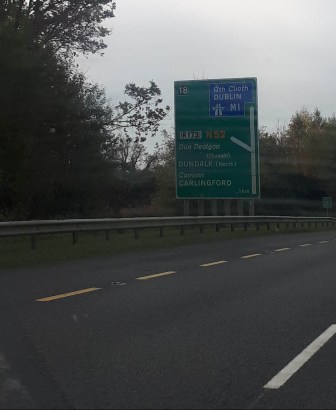
Another voice with a lovely lilting soft Dublin brogue, shouts across the street to his Northern Irish neighbour, who replies with gusto in a wonderfully impenetrable mix of vowel sounds.

20181031_102944

“Excuse me Peter. Would ye be after popping over to mine for cuppa or a pint of Guinness?”

“I would really love to John, so I would. But I have get my passport out, wait by the customs border, have a strip search and an internal body check, come back tomorrow to get my visa stamp and pick it up, so I do. I have a better idea. Get the boats, I’ll meet you on the Isle of Man. So I will”

Hard Brexit. Closed borders, restrictions on movement, difficulties in moving goods and trading, panic ensuing in the business community, people flocking to Tesco to stock up on Knorr stock cubes and bog roll. And the peace that has settled on an Ireland with a fantastic flowing, open border, that encourages trade and friendship, tourism, harmony, development, under real risk again.

Soft Brexit. We are going to leave because we don’t like you and don’t want to have anything to do with you. By the way, can we just stay in the best bits, you know the difficult things we can’t find a solution to, you know, just stay in those parts….Single market, customs union, let the good folks of Ireland travel and trade between each other freely, you know, no border in reality.

No Deal. We were happy to kick a ball about with you, but now we can’t agree which end each team is playing from, we are taking the ball away, trying to play keepy-uppy by ourselves. Get your own ball and play amongst yourselves. We are going to have a kick about with our new trading partners. Kiribati, Easter Island and Guinea Bissau. We don’t need you. At all. And we invented football anyway.

No deal is the scenario many are very concerned about and feels a distinct possibility. No deal negotiated to the agreement of all sides. No effective compromises made. Nothing set and signed. We walk away from Europe, turn our backs and in the words of Monty Python ‘fart in the Eu’s general direction’. Then we wake up the next day and wonder what to do now, as the stocks of Coco Pops begin to dry up and people fight each other over the last Stella Artois in the off licence.

Remainers / Remoaners 

Those of you who wish to stay in the EU, say ‘Aye’! Ah, so that is 1,2,3,4,5,6….48% wanting to stay. And 52% wanting to leave. Now, hang on. Democracy in action. The majority won. Fair and square. 52 is larger than 48. So, apparently the good thing to do would be to shut up and say nothing. You had your chance. Live with the result.

Many people in that large minority of 48% are very disgruntled and given the complexities and confusion and the mess of Brexit, are calling for another vote on the deal presented to the EU. IF we ever get one.

And and do stop complaining. Please. Hence the ‘remoaner’ tag. But think of it like this. You are at a dinner party for 15 people. 8 people decide to have the chicken and 7 are vegetarian. The veggies are told, sorry, the majority have decided to have chicken. And that is what you have to have too. Like it or lump it. You have no say now. Eat it or go hungry.

You would not be happy either.

Leaver / Brexiteer

Those of you who wish to leave, say “Aye!” All for one and one for all, say the 52% Brexiteers (and damn the rest of you, and stop moaning.) But let’s be honest for a second. What many who wanted to leave the EU expected Brexit to be, is not a patch on what it actually looks like so far. It is so complicated and so confused, that many leavers are also extremely cheesed off with what has / hasn’t been negotiated. (As long as that cheese is a vintage mature Cheddar and not a stinking Camembert).

The People’s Vote

Briatin has decided to leave the EU. A referendum. A final decision. Let’s leave. Pack your bags, the taxi is waiting. A certain Mr. N. Farage as your driver. Come on hurry up, get in, he is getting impatient. We need to leave. Now. Why are you sitting down? What, you can’t refuse to leave. Oh, that’s it, is it? You want to have a say on where we are going. Skegness not exotic enough for you? Trust you to want to go to Benidorm.

The People’s Vote is a very vociferous campaign, backed by many well known people in politics, sport, entertainment and public life, to put the final EU deal to a vote. “Do you accept the deal or not.” What could go wrong with another vote eh?

Brexit Means Brexit

Mrs. May is good at banging drums with her language. All throughout her election campaign she talked about being ‘Strong and stable.’ Her critics called her ‘Weak and wobbly’. Despite being an advocate to remain in the Eu, as the leader of the country Mrs. May has had to champion the leave cause. Her mantra became ‘Brexit means Brexit’. In that, we will leave. Definitely. We will. I promise. Deal or no deal.

A Brexit deal today seems a long way off still. Mrs May has become Mrs Maybe.

Brexit mean Brexit means chaos means uncertainty mean confusion mean headaches means frustration means…..and so on.

Enough of this.

I had planned to write a list of Brexit terminology for the English student interested in learning how to understand Brexit and what is going on in our fantastic country (because despite everything and all our disagreements, it is still a fantastic country with wonderful people, of every nationality, religion and political persuasion.)

But as I was writing, I realised that any sensible student of English would be better off watching The X Factor than the BBC or ITN or Sky or Channel 4 or 5. It makes a lot more sense and they will learn a lot more than trying to follow the political machinations and politician-speak that pours out daily, like a stream of melted chocolate words. Initially interesting, but ultimately completely unappetizing.

I will leave you with my poem that I wrote to try and encapsulate Brexit.

I remain, while others wish to leave.

Tony

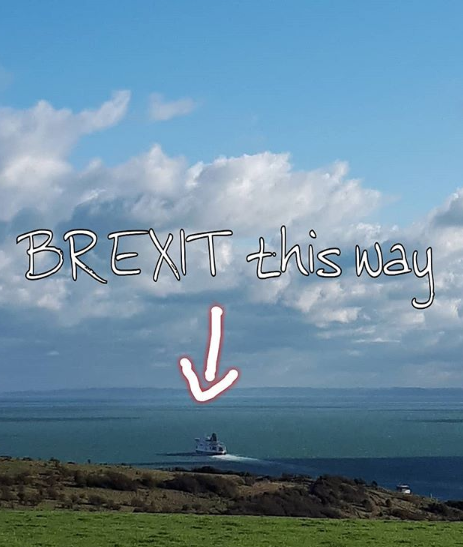
BREXIT – This Way

Goodbye
We’re leaving EU
An exit, really?
A way out of a mess
That was perceived, construed
Viewed through vitriol
And jingoistic pride
In a notion of a nation
That doesn’t exist
To think of a map
That we coloured pink
A pride in the desire
To assert our uniqueness
And to eschew difference

An exit. Really?
An utter mess
But there it is.
No exit, only a door
Locked and marked
‘Keep Out!’
Only Brexiteers
Shouts and jeers
Only Remainers
The I told you so, complainers
You said this, you said that
Everyone reaching for opinions
And donning tin hats.
A mass-debate
Intractable, endless
Argued and misconstrued
Misconceived and misunderstood, confused.

Because brexit
Is no exit
From the shit 
We find ourselves
Wallowing in
Up to our necks
Swimming against a tide
Of bile and hate and division ‘Close the gates we’re full’
Full of what?
A lack of empathy, compassion
Full of passion, yes
For a world painted in a hue
That which from the mirror
Looks just like me and you

Take back control
We’re strong and stable
Cut adrift in a leaking ship
In a permanent brexitstorm
With a captain and crew
Demonstrably unable to
Bail us out and hoping for rescue
Trying not to sink and being told
You scuppered and holed your own boat
And the lifeboats are full
Time to jump ship
Good luck everyone,

BREXIT – this way

More poems collected at frobipoetry.com

Brexit this way


20171008_152029


Learning & Education · Poetry and Writing · Travel

I want to write….But first you must read

20181022_133947

The written word is a splendid thing. It sits upon a page, decorating the paper in permanent ink, or it graces the screen, released from the confines of the keyboard, strung into prose by the creative, inquisitive, thoughtful mind.

I have long wished to write, professionally, personally, for payment or for pleasure. Writing is that most cherished of arts. An ability to share ideas and to connect with people far and beyond, in different towns and cities, cultures and countries. To have your thoughts impress, challenge, influence, please, entertain and create an emotional response from your readers.

But for one reason and another, I never had the time or the inclination to dedicate myself to writing. A career spent working 70 hours a week in the railway, the tiredness of the daily commute to London and back, travelling on business to Manchester, Birmingham, Glasgow….Holyhead (er, yes. Holyhead. The Isle of Anglesey, North Wales. Next stop Dublin, Ireland. Great place to visit, but my word it is a long way there and back.) Then an extended period abroad, around 6 years of travel and teaching in South East Asia. A period in my life where I taught English, shared our beautiful language and helped others learn and discover its delights, as well as trying to demystify its complexities (still trying….it is a fiendishly complex language). But I taught English. I didn’t write it. However, what long periods spent travelling vast distances by train and bus and boat gives you is time to fill. Which other than looking out on majestic landscapes, passing people you would never meet and remarking on how different their life must be, you often spent a lot of time reading.

I travelled extensively from 1996 to 1998, before settling in Indonesia to teach English. In that 2 year period I travelled from Hong Kong to Athens overland, via China, Pakistan, Iran, Turkey and Greece. I then travelled around India. Sri Lanka, Thailand, Vietnam, Cambodia, Indonesia, Australia and Singapore.

This was the pre Kindle era. In fact the pre Internet period. Only in the latter part of the century was the internet developing as a key and implicit tool in every aspect of our lives. But back then, 20, 22 years ago, travel was a blissfully disconnected experience. No Instagramming your favourite temple and uploading it to your 3 million followers, no Facebook albums of every meal you ate for the last month. Even a phone call had to be done from an IDD phone booth, none of this Skype or WhatsApp video calling. The future had yet to arrive.

So to travel unencumbered by technology and by instant connection to the world ‘back home’, was incredibly liberating. Time was present and you had to fill it. Not by endless, mindless scrolling through Twitter feeds and Instagram stories. I say unencumbered, but before the iPod or MP3 player, I would be loaded with cheap cassettes bought in markets in Quetta or Xi’an or Antalya. And that brings me to books.

Books were the mainstay of travelling. I devoured as many books as possible. I sought out backpacker second hand book shops, or exchanged them with fellow travellers. I read and read and read. Sure, my backpack was a weighty affair, loaded with 5 or 6 books. Not the Kindle of today with hundreds of titles stored on it. I would have loved to have travelled with a Kindle. But I don’t think I would have seen any of the countries I was travelling through. Books were there to pass the time that was not fulfilled with the pleasures of travel. The joy of discovering a new city, of getting lost in labyrinthine back streets, finding a cafe populated by friendly , welcoming locals with whom you shared no common language  (today, just ask google to translate…where is the fun in that?). When night fell on a long train journey, books were there to pass the time. And what a joy they were to have. Travel can be immensely boring. Sorry to disappoint you. But it can. Try travelling for 60 hours from Xian in central China to Urumqi in the far north west of China. 60 hours. One train, through the featureless Gobi desert. You see one impressive set of dunes, you have seen them all. And how many games of ‘Shithead’ can you play in 60 hours? (Actually my great friend and travel partner Simon and I played marathon sessions of shithead – it is a popular card among backpackers. Well it used to be. I expect everyone it too busy on their phones now.)

Every travelogue written or documentary made will inevitably distill the journey to its salient and most interesting parts. The incidents, good and bad, the highlights, the sights, the most memorable and interesting people and conversations. But they rarely emphasize the tedium of long, hot (or cold), seemingly endless, interminable journeys through landscapes that do not scintillate, enrapture, enthrall or amaze. And I am 100% confident that the authors and documentary makers fill these voids with reading.

I have digressed a touch. My travels were enriching and enlightening. But without an array of reading material, it would have felt far more uninspiring, much more of a hardship. And travel should wherever possible, be something that gives pleasure and experience to remember and share. There are a few hardy souls who deliberately set out to experience travel in the raw. I met someone who was travelling overland from the UK to India and had £1,000 for everything. Every meal, every bus ticket, every hotel. He was dishevelled, looked like he had been dragged through a hedge backwards and looked as if he hadn’t eaten a decent meal for weeks. Indeed, you can travel very cheaply and £1,000 can get you a hell of a long way in places like Turkey and Iran and Pakistan. But I asked if he was enjoying his trip – sans comfort. Oh yes, it’s great! It takes all sorts. I experienced discomfort on many occasions. I endured long, uncomfortable journeys on overcrowded, overheating trains. I endured, but ejoyed the retelling later. A little discomfort is inevitable and should be embraced from time to time. But not every single day, every single trip, every single meal, or rough, flea-bitten hostel.  Yet he loved the discomfort, the rawness of the experience, the up close and personal, being one with the people he met, from the poorest villager and farmer to the middle class civil servant on a train. He was devoid of possessions, carried only a few clothes in a beaten up rucksack. But he read. He carried books and they helped carry him on his journey.

Since returning to the UK in 2002 my life has been one of immense challenge and difficulties. Our children were born 16 weeks prematurely. We had triplets, one of whom, Jewel, passed away after 17 days. Our other daughters Milla and Louisa were in hospital for 6 months. Milla had severe cerebral palsy and passed away in December 2016 aged 10. Louisa is doing really well and is now 12. She has sight problems caused by her premature birth; partially sighted in her right eye and blind in her left.

The stress and exhaustion of caring for our daughters put pay to any aspirations I had to write. It also severely limited my reading opportunities. Our evenings were constantly devoted to caring for Louisa and Milla, our days spent working and trying to function through a fug of tiredness. The moment I picked up a book to read, my eyes would glaze over and my eyelids became immediately heavy. I would be asleep in seconds.

But today I am able to give more time to writing. I am two thirds of my way through completing a novel. I have written an extensive range of poetry which can be seen on my other website or on instagram (@ajfrobisherpoetry) . Later this year two of my poems will be published in an anthology of poetry.

Writing is cathartic, an escape, a release and a way of expressing myself. I value the opportunity I have to write. But without the hundreds of books I have read, I would not be sitting writing this blog, my poetry or my novel. I have met people who proudly proclaim, ‘Books, nah, I have never read a book’. As if that is some sort of badge of honour, a decoration of the illiterati, something to trumpet and smile about. So much time is invested into our education, a free education at that. To have been given that chance to learn to read and then throw it away dismissively smacks of extreme arrogance and laziness. To read is to discover. My daughter Louisa has struggled to read. Her level of sight impairment is so pronounced that it has been detrimental to a ‘normal’ education. However, after years of patient dedicated assistance at her special need primary and secondary schools, last year at the age of 11, she made a huge step and began to recognise words. Then sentences, and eventually able to read paragraphs. It was incredible to witness and something we feared may not happen.

To read is to discover, no matter that it has taken years to reach this point. She is now discovering and able to do so herself. Not idly dismissing books as something uninteresting and unimportant.

So now I pride myself on being able to write, but also to have access to so many amazing authors and writers. To be able to consider opinions and ideas and to formulate my own in response, or separate to them. To be able to read a book and allow it to influence my thought process or not. To help me consider the words I choose to write and the purpose of them. The importance of what I wish to say.  The relevance to those who may choose to read them.

I now take pleasure from dipping into poetry books and savouring the sentences and poems crafted so intricately. To read and learn of Japanese philosophy, to understand the ideas of silence and mindfulness, to consider and challenge my own problems with anxiety, to escape into fiction.

To read is to discover, but to read is also to write. And long may it continue to be.

As Morrissey once said,

“There’s more to life than books you know, but not much more.”

Best wishes,

Tony


Learning & Education

The ‘L’ Factor – Language Learning

20181003_102418

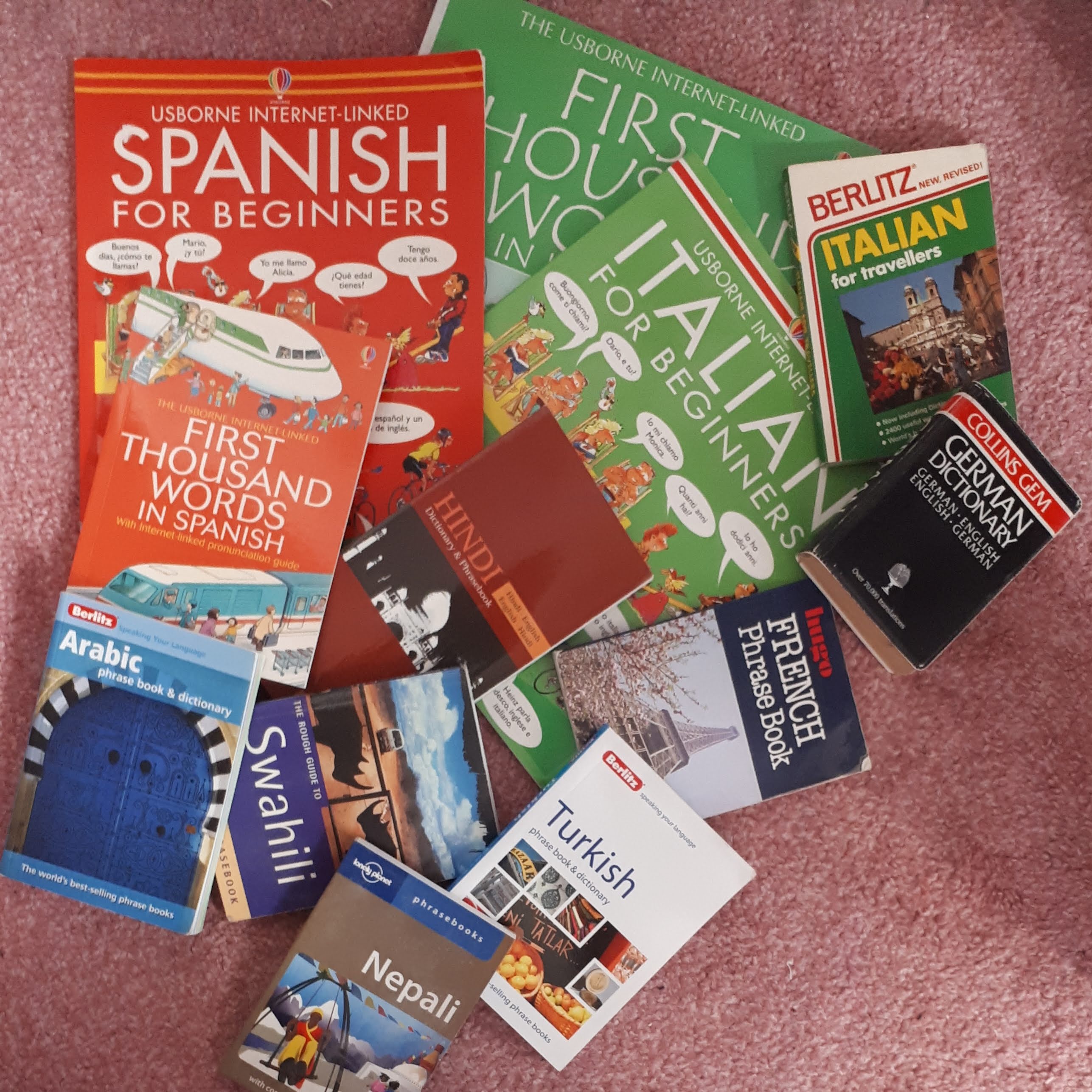
Language Learning….Having The ‘L’ Factor…

Learning.

The ability to learn a language, is driven by a number of factors;

1. The personal motivation you have – why do I want to learn this language, how much do I want to learn it

2. The needs and reasons for learning it – are you moving abroad for work, are you going backpacking, do you need to learn it because you have been told to by your boss?

3. The interest you have in the language and its cultural / geographical context (No point learning Arabic if you are going to live and work in Japan)

4. The encouragement (or otherwise) you receive from others – do you have friends who speak the language and are keen to practice also. Or do children refuse to practice French with you because…’Dad, it’s embarrassing…’?

5. The environment in which you learn (to learn Spanish in Andalusia, to live and study /work immersed in the culture and landscape of the language is better than an hour a week in an office in Birmingham)

5. The time and opportunities to practice (interacting face to face or via Skype, reading or listening or watching information in the language, the presence or absence of stress / pressure from work or family commitments.)

6. The teaching methods used, or your own approach to learning (Do you write long lists of words with translations or do you select a handful of words and expressions and try to actively incorporate them in a conversation / email exchange etc?….ie actively engaging with the language as opposed to passive learning and not using it.

7. External Factors: Can you find 2 hours to sit and study, free of distractions, the television in the corner, your children playing, fighting, shouting, the dog insisting on that walk, the emails stacked up unanswered, the project deadline looming? Our brains are amazing things, but in order to be most effective at any task, they need a clear, uncluttered, focused approach. Too many distractions and things going on, will limit any effective learning. You need to create the time and space and provide you mid with the freedom to learn.

8. Confidence to use the language, and enjoying making mistakes – We all make mistakes. I do. Every day.  Even as native English speaker of 50 years and an English language teacher of over 20 years. So don;t expect perfection. Nor worry about making mistakes. Mistakes are the lifeblood of learning. I once asked for a cup of tea in Indonesia, without sugar;

“Satu gelas teh, tanpa gila” There was a look of disbelief, followed by a broad smile and a laugh. I repeated my request. More laughter

“Oh mister, satu gelas teh, tanpa gula?”

You see I had asked for “A glass of tea, without crazy.” Gila is ‘crazy’, Gula means sugar. Easy mistake, a funny mistake and one I immediately remembered the next time. The mistake and my confidence to make the mistake led to my learning. If I had just read the word ‘gula’ in a dictionary, it would not have had the impact, the positive impact, the mistake had.

So be confident. Try the language out. Make your mistakes and the learning will come.

Good luck.

Don’t forget, if you are looking to improve your English, for any reason, from work, to university studies, to travel, my online English classes are right for you. I will work with you to tailor the right course for YOUR needs.

Get in touch and let me help you learn English more quickly and effectively.

And by the way, when you are practicing your newly learnt English, mistakes are positive things. Make them!

Best wishes,

Tony


charity

The Significance of Pain ~ Walking 30 miles in a day for Make A Wish

Pain. It’s temporary they say. It will pass.

It’s true. Pain is a temporary thing and it does pass. But while you are experiencing it, well, it hurts.

Stating the obvious. It hurts.

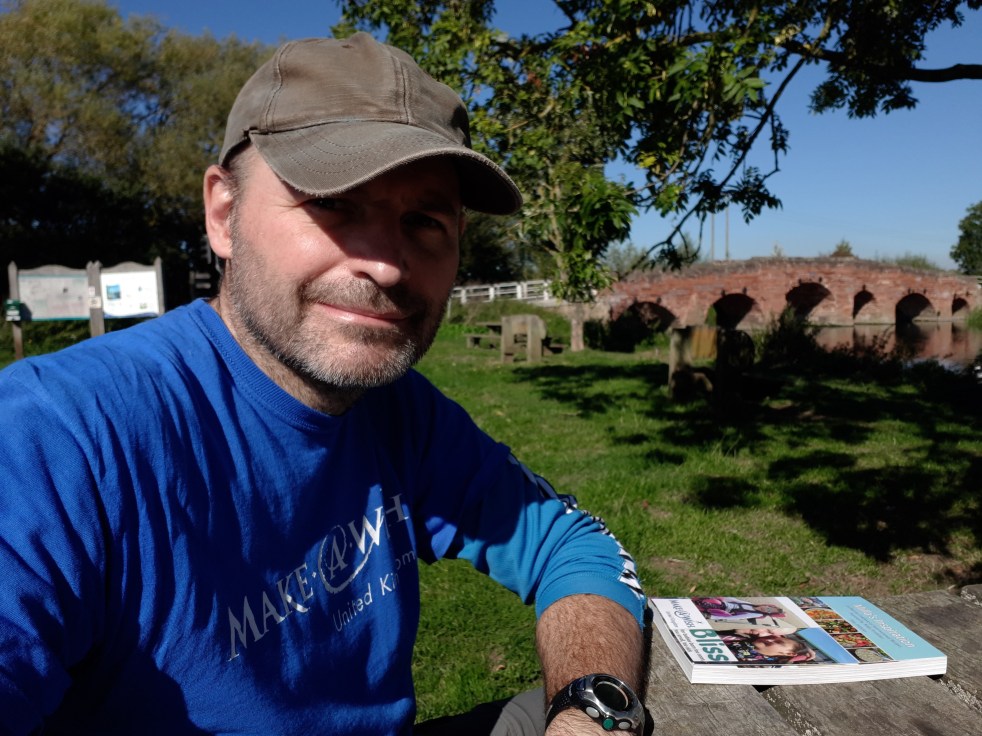
Last Thursday I decided to do the second part of my charity challenge for Make A Wish. Having successfully cycled coast to coast, from Aberystwyth to Lowestoft, 326 miles in 3 days, I set off at 6am to walk from Cheltenham to Worcester. A marathon in a day.
I will be completely honest. I had trained and was ready to cycle over 100 miles for 3 days in a row.
My walk was around 30 miles in total including walking to the station to get the train to Cheltenham and back home from Worcester Cathedral.
Had I trained? No. A few walks with my family down by the river or the canal. But no. No specific walking training.
Just a high level of fitness from cycling and a willpower to succeed and a determination to finish.

I first felt my ankle after a few miles. I recognised the pain. I had experienced it before, many years ago while trekking in Africa to climb Kilimanjaro and in Nepal to trek to Everest. The outer bone that protrudes from my left ankle was sore and getting worse. The lateral malleolus…a bone you never think about, until it hurts.

So I walked on, in increasing pain. Every step I was conscious of my ankle rubbing, bruising, and being painful.
What can you do?

A. STOP!
B. Call a taxi / family and pick you up
C. Ignore the pain
D. Keep going
E. Smile / grin and bear it
F. Swear and shout and feel sorry for yourself.

What did I do? C,D&E

What did I think about doing, even briefly? A,B&F

Pain is temporary, but it hurts.
How do you ignore pain? It is easy to tell yourself to ignore pain, not so easy to listen to and follow your ow advice. But I focussed on some key facts and reasons to keep me motivated;

• You chose to do the walk
• You wanted to do it
• The walk will end at some point
• The pain is not stopping you from physically putting one foot in front of the other
• You believe you can do this
• You are walking in beautiful countryside
• You are walking on a lovely warm September day
• You know where you are going, you know the route
• Your pain will pass, for many children they live with constant pain and discomfort
• They can not turn off their pain and it may be more intense and more difficult to ignore
• You have a goal. You have an objective. You have made a committment
• It is easier to quit than continue. Don’t take the easy option
• People believe in you. They have supported you
• People have donated so you can do these challenges, and ultimately help life limited children
• Every step is a step in pain, but a step closer to home
• Focus on your purpose, not your present discomfort
• Be mindful of where you are, why you are there and the pleasure, not the pain you feel.

After many hours walking, passing quiet villages, along winding country roads, past hills and farms and alongside rivers, listening to the gentle sounds of an English afternoon in the countryside, I reached my destination by the River Severn and Worcester Cathedral.

I didn’t jump for joy and celebrate wildly for successfully walking a marathon. I said a quiet well done…actually more of a ‘job done’ and thought about getting a taxi home.
But the traffic was terrible and it was such a lovely evening that after 27 miles, I decided to walk home.

Ignoring the pain.
Remembering the pleasure.
Thinking of the reasons why I did it.
Knowing I had honoured my daughter Milla. Remembering her spirit. She lived a life of discomfort and pain, there was no let up. Her cerebral palsy meant painful spasms and stiff muscles. It also meant she could not walk.

So, I walked 30 miles. And each step my ankle reminded me that pain was something many children like Milla had / have to endure constantly.
But also that my pain was nothing.
It would fade.
Yet the memories of that day of solitary walking would not fade, the enjoyment and the amazing support and the money raised. £1,200 to help Make A Wish continue to grant wishes that create lasting memories.
But neither would the memories of my inspiration fade. My daughter Milla.

I walked for her, because she couldn’t.