

Why language learning still matters.


Asalaam wa’alaikum…bonjour, lebus? Al’hamdullilah….ca’va bien! Good thanks, and you?
Being an English teacher is a job where the rich use of English is an ever constant thought. I live the language, help others improve, develop and gain confidence in their English and immerse myself in the complexities of verbs, nouns, adjectives, adverbs, passives, actives, prepositions, tenses etc etc.
But is an ability to speak English as prized as it once was? Is having a command of the English language as advantageous now as it was 30 years ago?
Turn back the clock….it’s 1996 and I am somewhere in northwest China – Kashgar, home of the Uighurs – a Muslim minority population in majority Han Chinese China. The semi-autonomous Xinjiang province. The Uighurs speak a Turkic language. But we are surrounded by Chinese and Arabic scripts, Mandarin and Uighur speakers and very few English speakers.
My friend Simon and I were backpacking. A 4 month overland trip from Hong Kong to Athens through China, down the Karakoram Highway in Pakistan and across to Iran. Through Iran and a traverse of Turkey before island hopping through the Greek Islands and arriving in historic Athens.
What did we have for our communication needs? Google Translate? No. The internet? No. A personal guide and translator? For the occasional guided tour, yes, but obviously not for the entire 4 months. Pocket dictionary and phrase books? Yes.
However, what we mainly relied upon and were very grateful for was the ubiquity of English. In every country signs were mostly in dual languages, especially where alternative alphabets / scripts were used. Announcements in major Chinese train station – Beijing, Shanghai, Hangzhou, Xi’an were made in Chinese and English. Everywhere we went there were people who either spoke English to a decent level, or were keen to practice (and by default help us find restaurants, bus stations, accommodation etc)…and occasionally fleece us.
Sadly we fell victim to a very obvious scam in Beijing. ‘Kevin Lee,’ enthusiastically befriended us while we were trying to buy tickets for a 16 hour journey to Xi’an. Long story short, we trusted him and his excellent English. He helped us buy 1st class tickets and we bought him lunch. Only later the concierge at a hotel confirmed the tickets were 3rd class. Lesson learned.
I digress.
So we were fortunate to benefit from the desire of so many people to learn English. We used our English to open doors, to help navigate across a large swathe of the world. Speaking English was a necessity. Without it we would have struggled. The only place we did encounter problems due to a lack of people who knew any English was in Eastern Turkey. Not Iran, where so many were enthusiastic learners and pleased to host two young chaps from the UK.
Fast forward to 2024. I am writing this in stifling heat and humidity in central Java, Indonesia. I first arrived in Indonesia in 1997. Still backpacking. The thrill of discovering new places and adventures on remote or lesser travelled islands was mixed with an opportunity to learn a language and quickly. I had a woefully inadequate mini dictionary and a bag full of mistakes but managed to pick up enough Indonesian to survive 2 months travelling. And not just Bali, but places where English was in very limited use.
Nowadays, if I am struggling with the language, a flick through my dogeared mini dictionary and phrase book may yield the appropriate phrase or word. Yet, a few seconds on Google Translate and what I need to say is present on a screen. In fact, I don’t even need to say it. Complete and full understanding. But an absence of any real personal interaction.
It feels to me that learning English or any foreign language is becoming less desirable for the majority of students. Yes, most students are required to learn English (or French or Spanish etc) in their schools, but with communication so quick and easy from online translation services or AI, it is unsurprising students are no longer engaged in learning English in the way they used to be. Post school language learning is sadly in real decline.
I speak Indonesian fluently, so am not reliant on others in helping me out due to a language barrier. But I hope students are still encouraged to continue learning English or other foreign languages at school and afterwards. The world is a wonderful place and the ability to communicate on a personal level (not only via a screen) helps foster empathy, understanding, cultural appreciation and friendships.
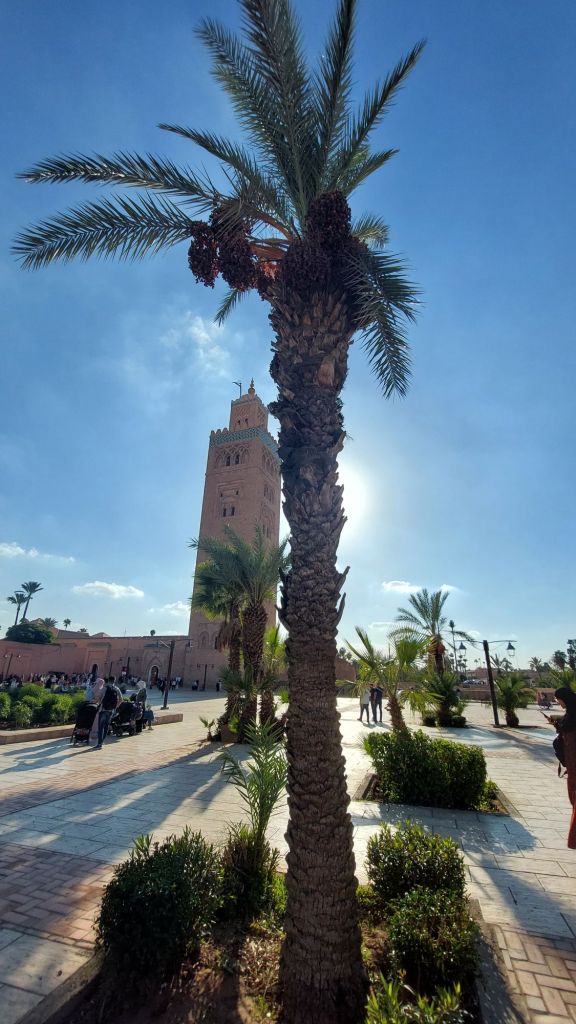
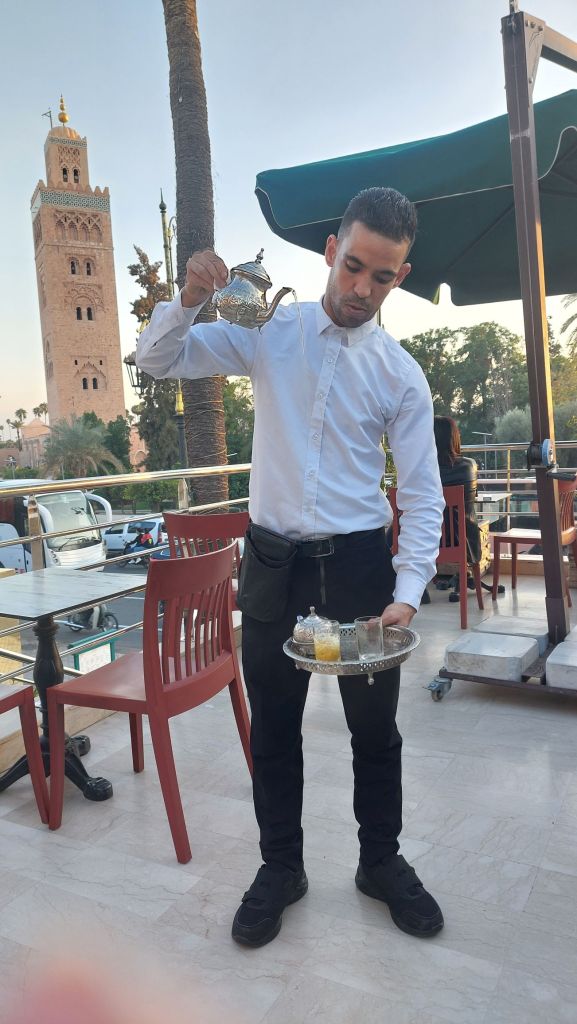
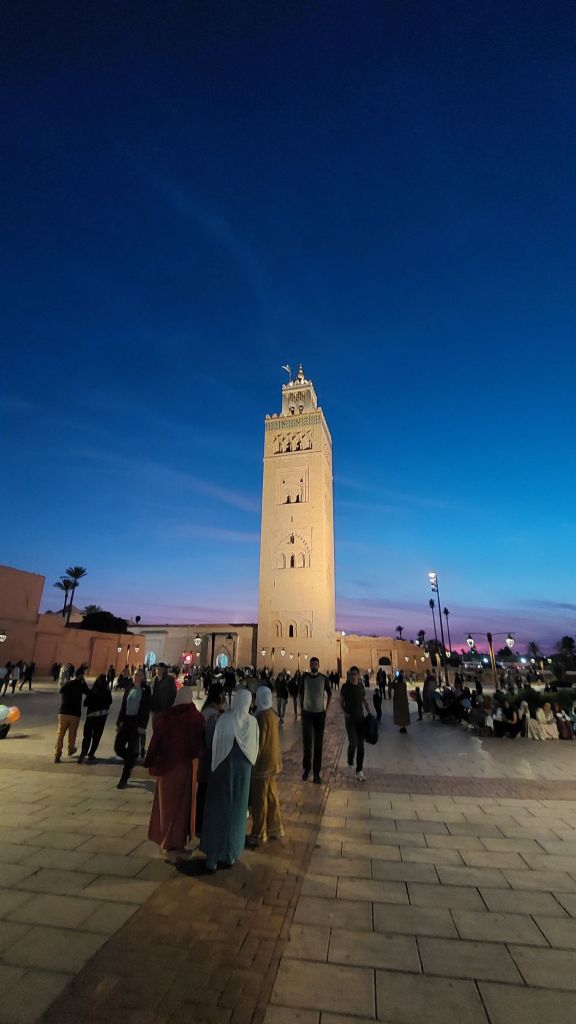
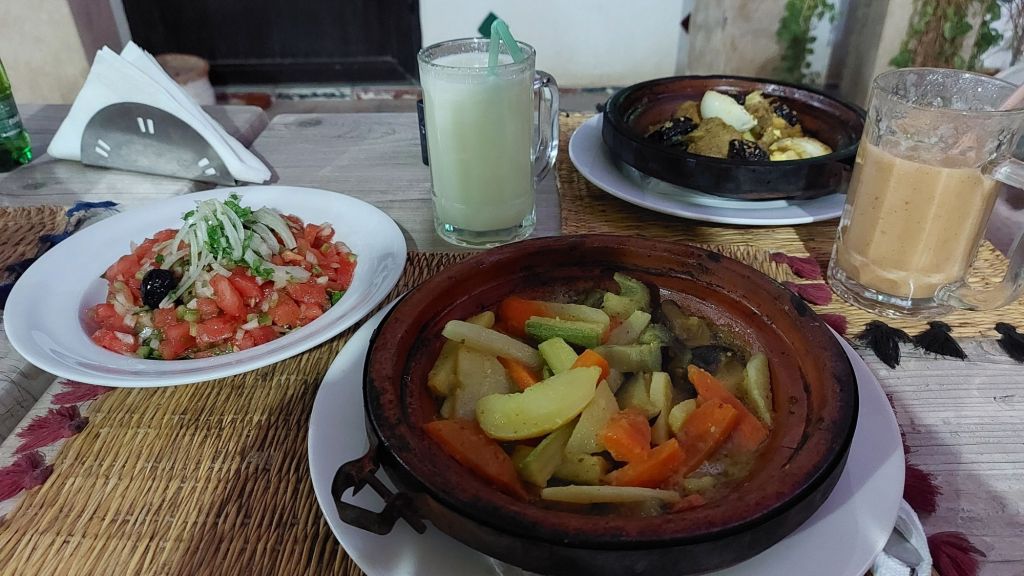
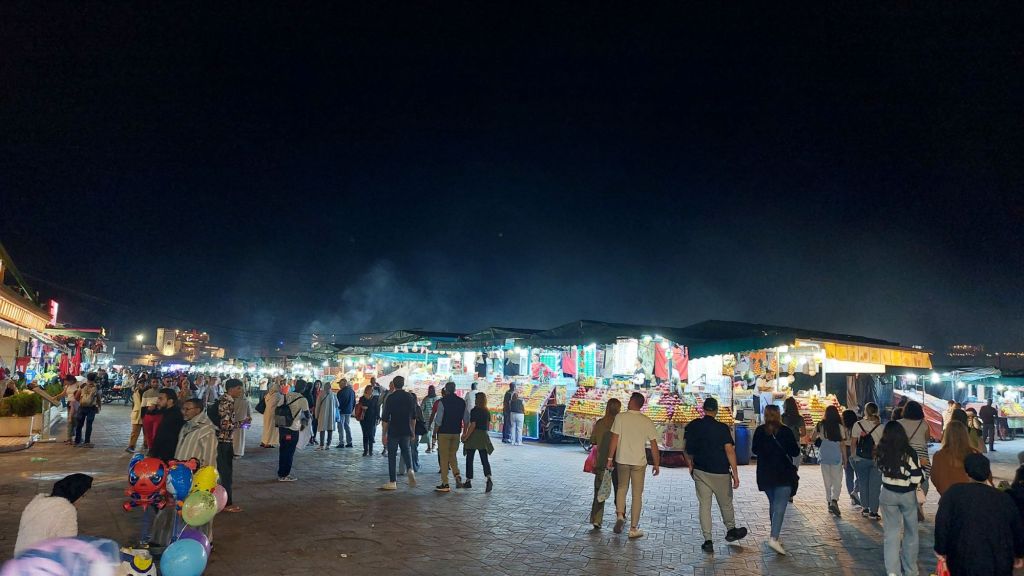
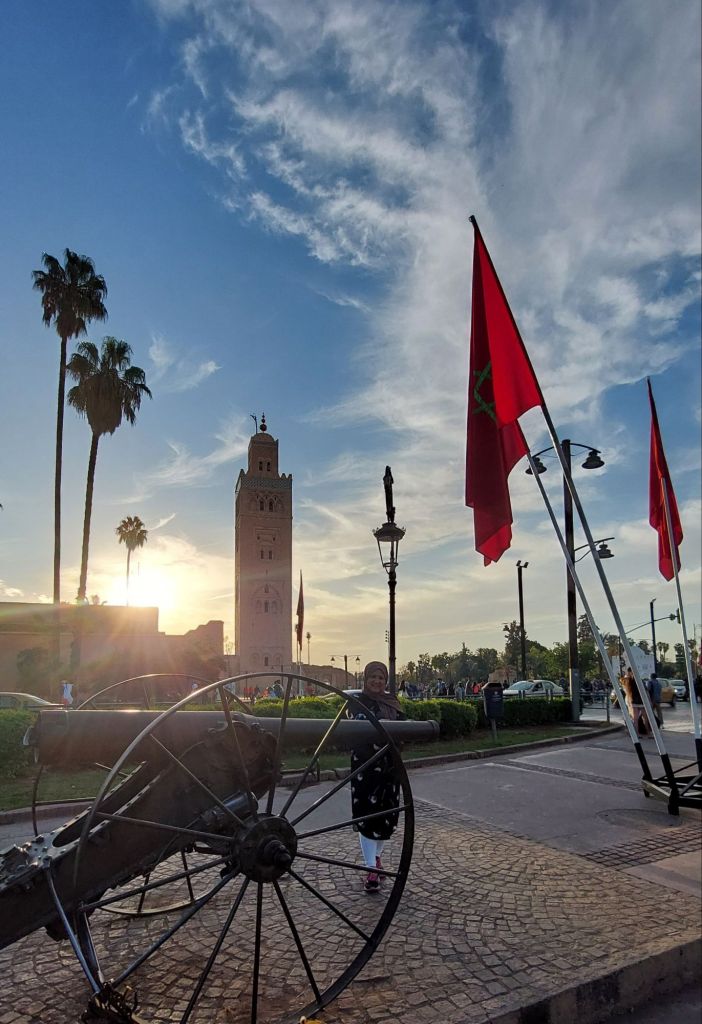
I recently spent a few days in Marrakech. A fantastic blend of Arabic, Tamazight (the language of the Berbers) and French culture and language. The one thing you notice in Marrakech is the abundance of western tourists. The local Marrakechis are adept at multi-lingual communication and blend French and Arabic in a delicious linguistic cocktail. The shopkeepers, wily old foxes one and all, are the true linguists. They switch effortlessly between Arabic and French, to English, German, Italian, Spanish. They understand the way to a sale is to be engaging, courteous, humorous, welcoming, open and friendly. They know this is achieved by using language. Creating a connection face to face, not blithely holding out a screen. Dispassionate, disconnected, disastrous for business. Communication has to be something we do from the heart. Using our voice to express emotions and needs, requests and seeking clarification or guidance. Yes, a screen on a smart phone can achieve that.
But there is never the joy of trying a language and seeing the person smile in recognition that you are speaking their language, that they understand and are grateful that you made the effort. It is the same with English. To find someone who has learned the language, is willing to help you and takes pleasure in communicating in a language they have spent time and effort learning – seeing their pleasure – is equally satisfying.
So, yes, Google Translate has its place and I do use it. But as a back-up. My French is pretty shaky, my Arabic is limited, but I thoroughly enjoyed trying to speak with people in Marrakech in their language. And I was equally grateful when people were happy to switch to English. And I found myself smiling with them, not staring at a screen, trying to type the next sentence I needed translated.
My takeaway from recent travels is that language learning is still important, though appears to be diminishing due to the rise in language translation technology. But we must continue to learn each other’s languages. It is what connects us and makes us human.
Shukran, merci, terima kasih…thank you for reading.


 Online English Language Lessons